Why antarctica? What this trip means…
Traveling to Antarctica is not just a journey to a remote continent; it is a quiet encounter with scale and fragility. A personal confrontation with yourself and the tiny place you occupy in the world, with the unsettling realization that there are still places on Earth that remain isolated and indifferent to us. I went South expecting landscapes. I found perspective.
This article is a record of that transformation: the crossing of the infamous Drake Passage, the first sight beyond the Antarctic Circle, the wildlife encounters that felt almost mythic, and the daily rituals aboard an expedition ship that became a floating microcosm of curiosity and care. It is also an emotional invitation to witness, to learn, and perhaps to become an Antarctic Ambassador in the purest sense: someone who carries the memory of this place with responsibility and reverence.
In Antarctica you find intensely blue skies, clear and pristine waters, silence, lands never touched by humans, a whole planet within our own. It’s remote, it’s fragile, and it makes you rethink how big (and small) everything else is. Even before I got there, I had this feeling that the trip would stay with me for a long time. And I was right — it hasn’t left my mind since. Sometimes I catch myself amazed that I was ever in a place like that at all. It’s one of those experiences that keeps echoing quietly in the background, long after you are back home.
For the first time, I’ll be writing an entire article in English — a small milestone for me!
Note: most of the photos published in this article are mine; however, some were kindly shared by my travel companions, and others were provided by Sofía, the expedition’s official photographer.


· · ·  · · ·
· · ·
Becoming an Antarctic Ambassador
Becoming an “Antarctic Ambassador” is basically realizing that this place — one of the most fragile corners of the planet — needs people who care about it long after the trip is over. When I saw how everything works down there, how a whole penguin colony depends on a single stretch of ice or how a tiny change in temperature can flip an entire season, when I saw how many people proudly dedicate their lives to protecting such a unique place, something inside me changed. I started noticing the delicate balance that keeps this land alive… and how easily it can be broken.
And from that awareness, small but real commitments start to appear. Maybe you rethink what you buy, less plastic, less non-biodegradable stuff, maybe you start sharing what you learned, or maybe you expose the companies that exploit krill — those tiny, translucent creatures that literally hold the whole Antarctic food chain together. Without krill, everything collapses. They’re simple gestures, yes, but they carry a bit of Antarctica wherever you go.
So this is not just a tourist cruise or an ordinary holiday — it’s a journey inward, a journey into your own awareness, a moment to admire and understand the planet we live on. Only in places like Antarctica these thoughts become much more visible and clear.
Moreover, only by traveling to Antarctica you can take part in various citizen‑science projects, observing whales, recording atmospheric conditions, or helping monitor bird populations. In a way, that makes you a kind of junior scientist — a field collaborator collecting valuable, first‑hand data. Happywhale, Globe Clouds, or even NASA’s Citizens Science Project are some of theses initiatives.




· · · · · ·
HIGHLIGHTS OF THIS TRIP
Click ↓
1. The infamous Drake Passage
2. Crossing the Antarctic Circle
3. Wildlife observations
4. The vessel MS Expedition
5. The expedition guides and lectures
6. The logistics
7. What you need to know for this trip
8. The daily travel journal
The infamous Drake Passage
The Drake Passage deserves a chapter of its own. The fear and the uncertainty of whatever awaits you out there turn it into something almost epic. It’s the psychological border, the emotional checkpoint — the price to pay to reach Antarctica, unless you’re willing to spend a small fortune on a flight, which is also an option.
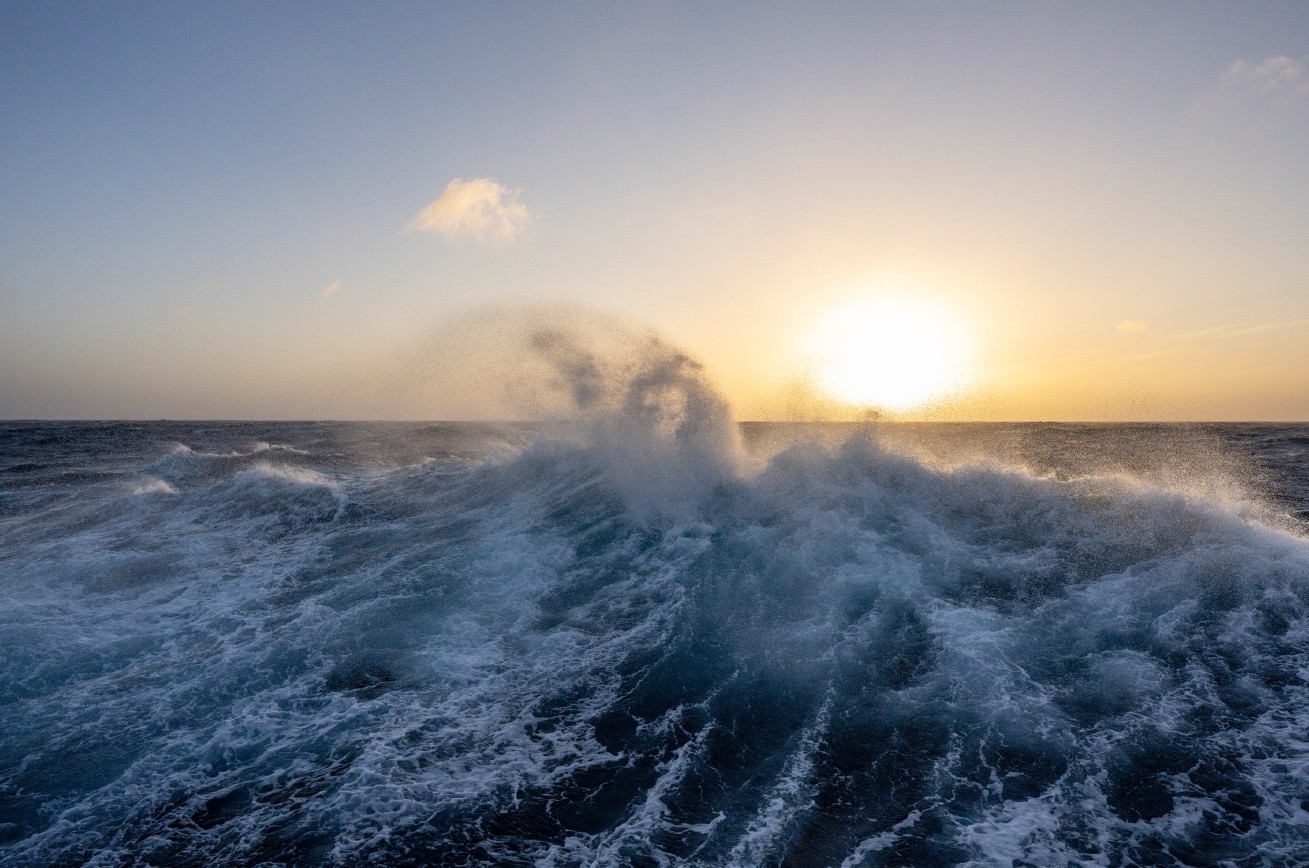
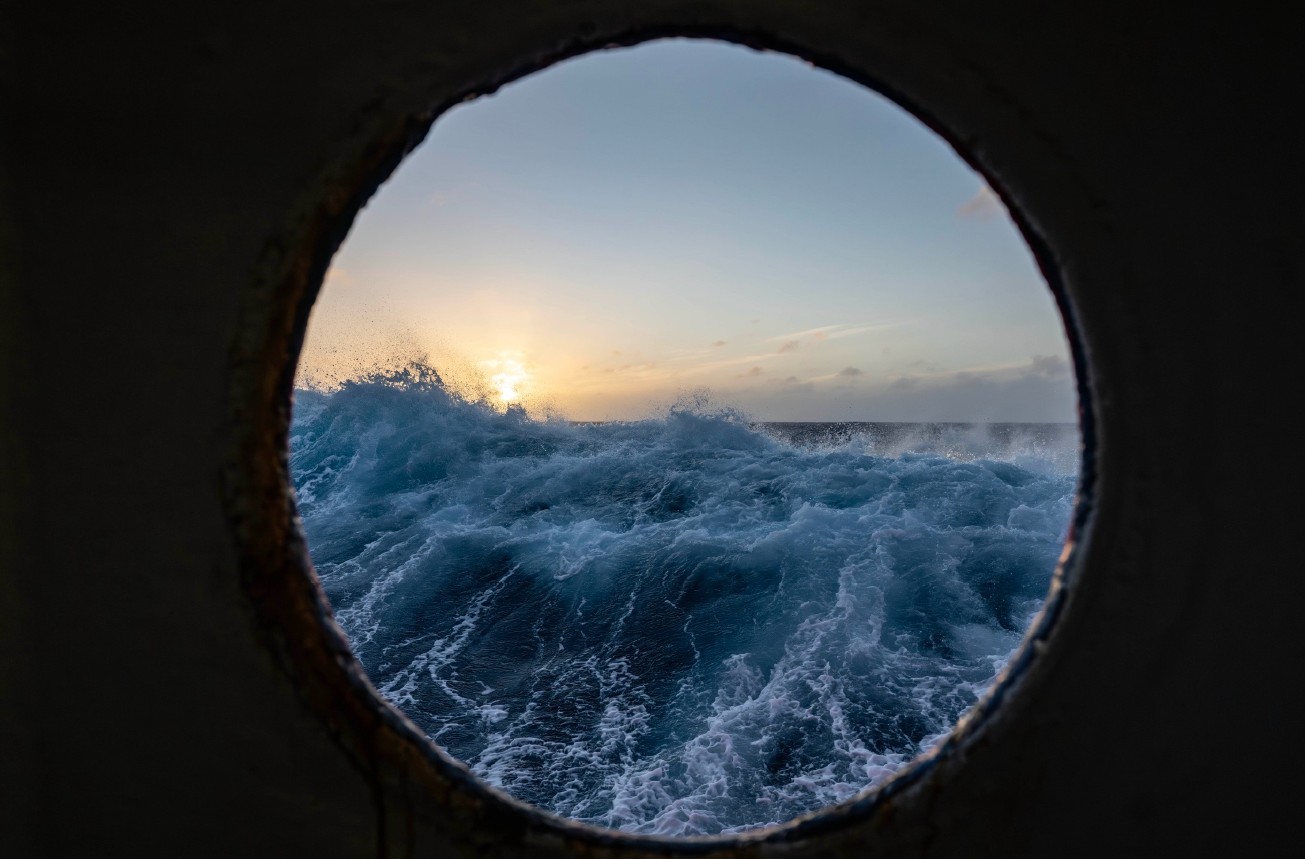
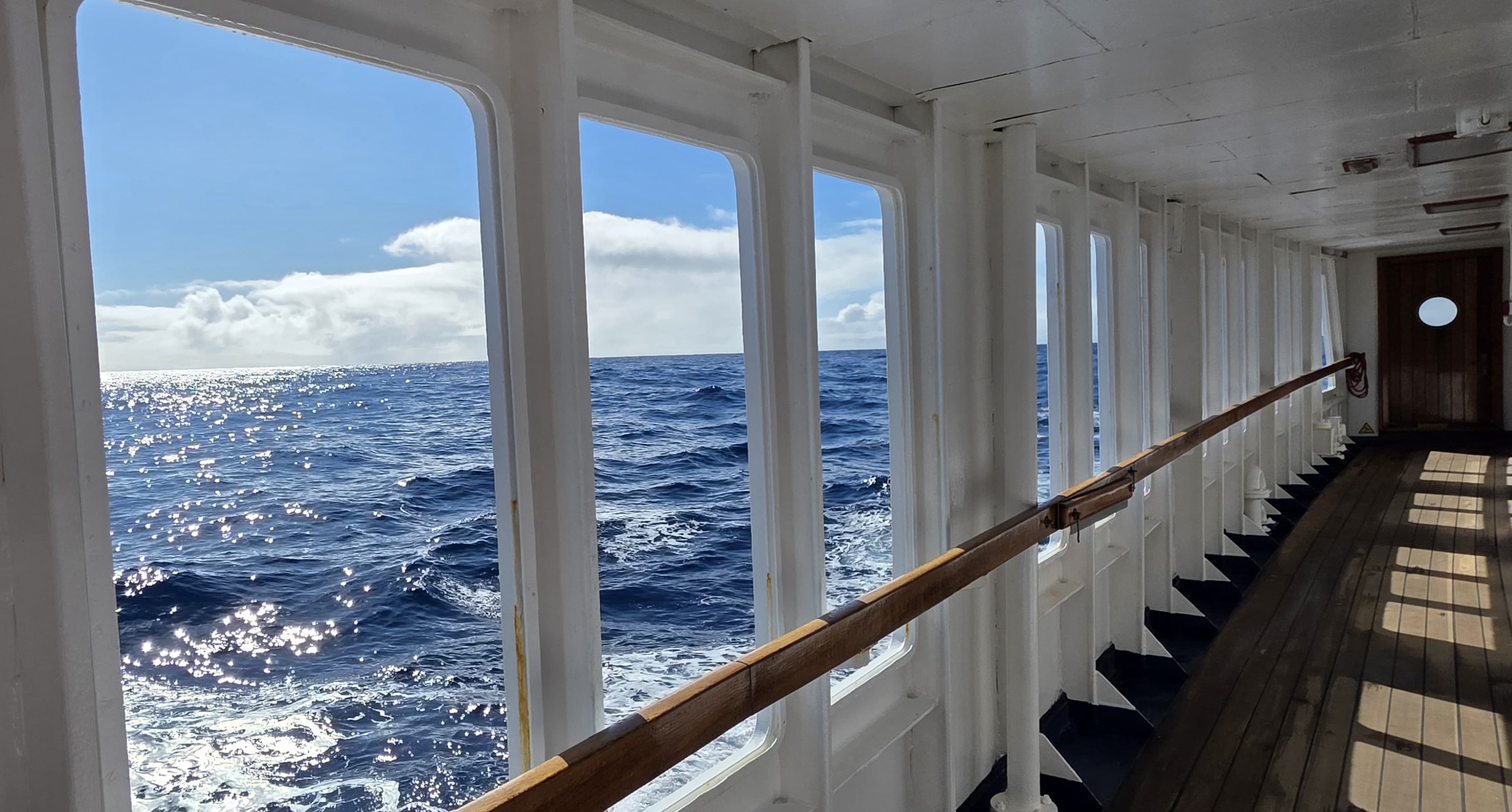
People talk about the Drake like a character with two very different moods. There’s the infamous Drake Shake, the one you see in all the social media videos: waves rising like moving mountains, chairs sliding across the dining room (chairs in the dinning room were in fact chained to the floor during those days), and passengers wobbling down the corridors like newborn penguins. And then there’s the placid Drake Lake, the calm, glassy version that feels like a reward from the universe.
In the days before departure, I devoured every reel, every post, every “What to expect when crossing the Drake” article. I saw stories of people who spent two days horizontal, surviving on seasickness pills. Others described sunsets so calm the ocean looked like brushed metal. The contrast only made the suspense worse.
I have to admit that my Drake wasn’t particularly bad — at least not compared to what it could have been — but my brain, always in prevention mode, together with my very limited sea experience, meant that for me it felt like the worst of all sea storms, and I didn’t have the courage or the balance to get out of bed. For two full days on the way there and other two on the way back, my cabin became my entire world. Maybe on the return crossing I actually had good reasons to stay in my bunk. But it was not precisely the seasickness that kept me there. It was fear, physical terror — completely irrational, of course — that the ship might capsize under the constant pounding of the waves. Every noise made me jump, and sleeping was nearly impossible.
Thank God for seasickness pills and for the TV channel in the cabin, where you could watch the lectures from the expedition guides without moving an inch. In addition, plenty of documentaries, movies, the live ship tracker and live cam of the bow – which I tried not to check very often so I wouldn’t worry myself unnecessarily. Getting up for breakfast or lunch became a truly survival exercise — a basic human need I tried to get over with as quickly as possible. I barely talked to anyone. I’d step outside for a quick look at the deck, pretend I was fine, and then rush straight back to my cabin.
And then, after two long days — technically three, since we were sailing straight to the southernmost point we would reach — the first iceberg finally showed up on the horizon. Suddenly everything made sense. The uncertainty, the nerves, the seasickness, the fear — it all dissolved into one overwhelming thought: I made it. I’m really here. I SURVIVED THE DRAKE!

· · · · · ·
CROSSING THE ANTARCTIC CIRCLE
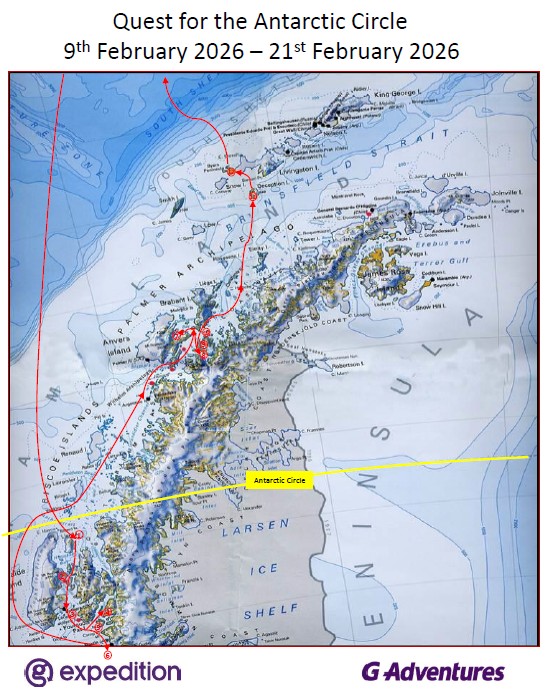
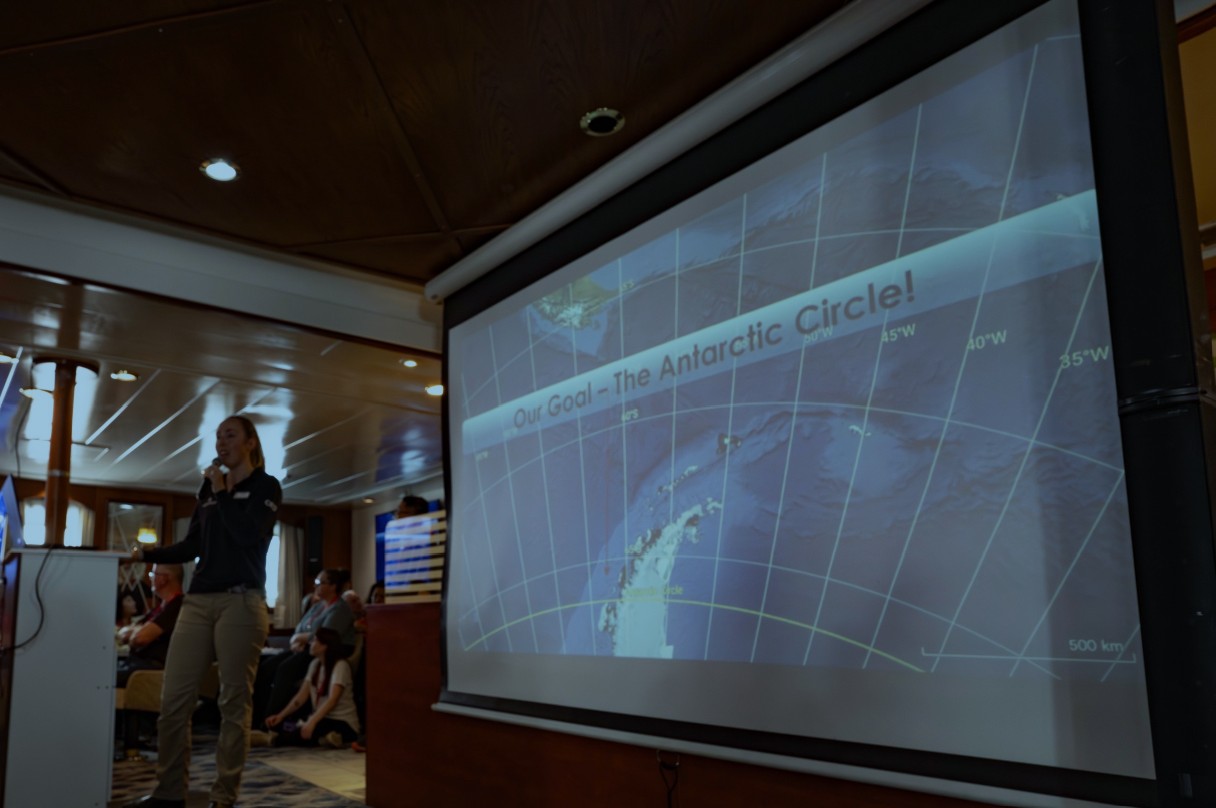
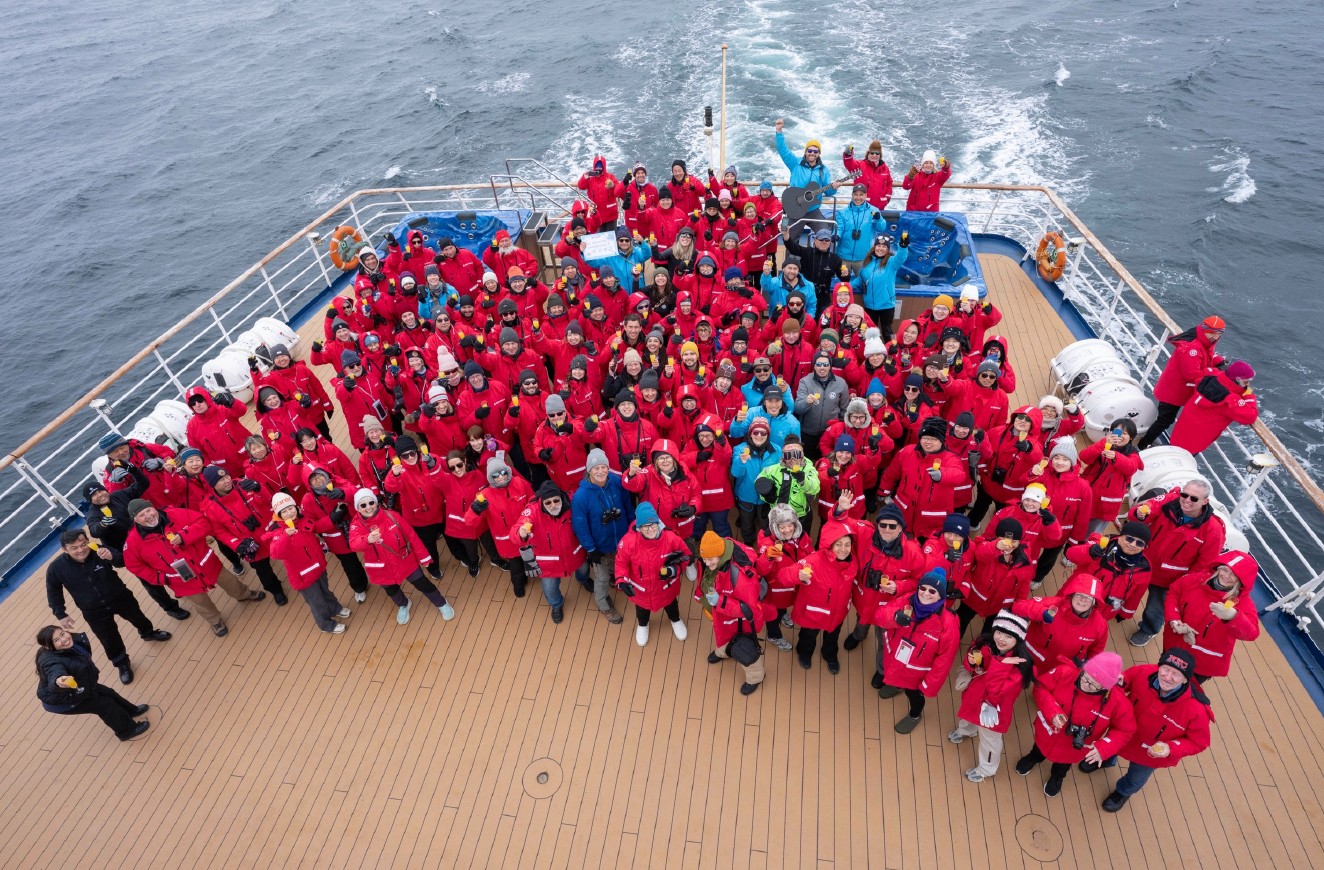
This was, without a doubt, one of the main reasons why I chose this trip over others. Crossing the Antarctic Circle is something not every expedition gets to do. It’s a simple line on the map at 66°33’ South, but when you actually reach it, it feels like a big achievement. When the expedition leader announces it over the speakers, people start putting on jackets in a hurry, and suddenly everyone is out on deck waiting for the GPS to hit the magic number. The moment itself is fun and very emotional. The crew made a little celebration for us — a quick toast, a few cheers, music and lots of photos of the screen showing the exact latitude. You are officially entering a part of Antarctica that fewer people get to see.
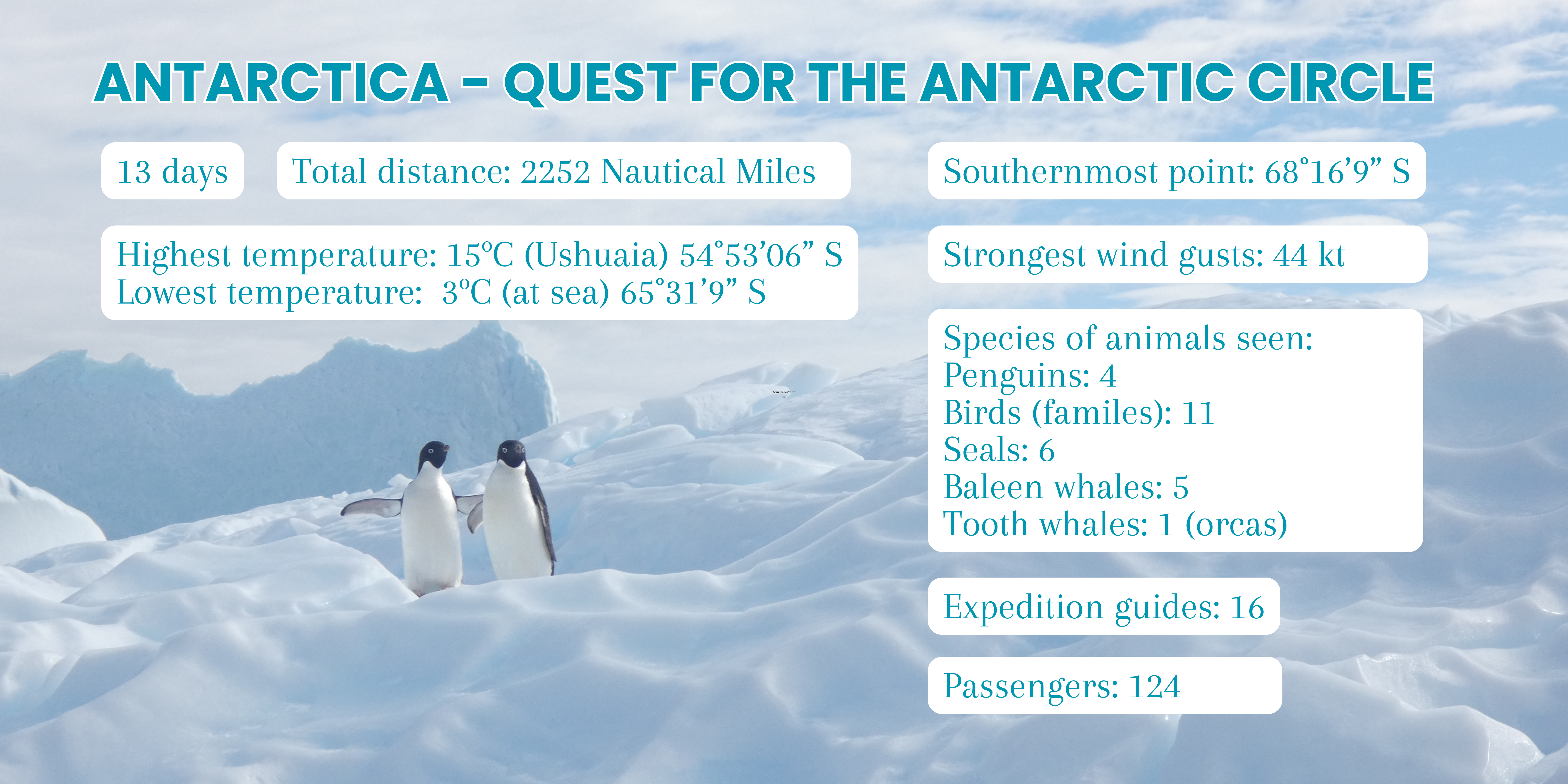
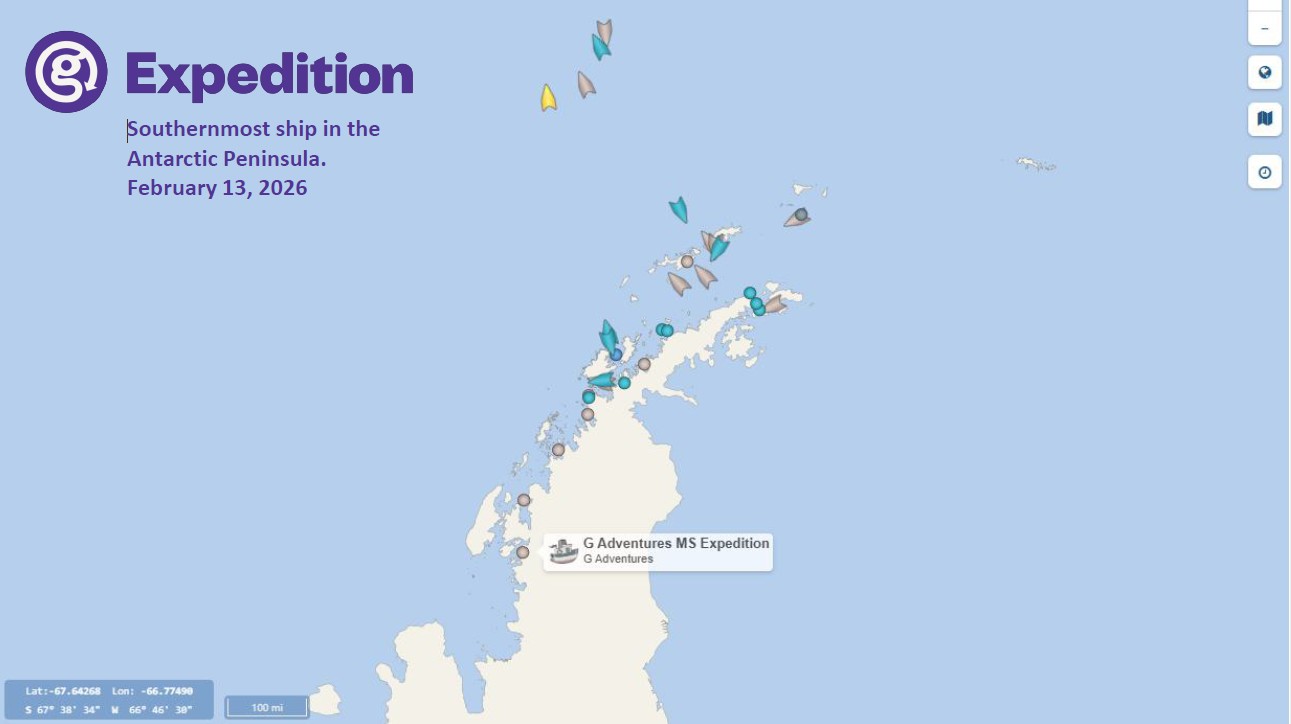
What we didn’t know at that moment was that we would keep going even further south. Much further. We eventually reached Red Rock Ridge in Marguerite Bay at 68°16′ S — the furthest south location of the entire trip, and the southernmost point the MS Expedition has ever reached in all its years of adventures. Crossing the Circle felt special, but reaching that latitude felt almost unreal. We were completely alone. Not a single ship on the horizon. Just us, the penguins, the seals, the whales, the ice, and the uncertainty of what might be beyond the horizon facing south.
If crossing the Arctic Circle is easy and accessible for most people — something you can do many times and even live within — crossing the Antarctic Circle is something entirely different: a once‑in‑a‑lifetime experience!


· · · · · ·
Wildlife OBSERVATIONS
Spotting wildlife is one of the things that makes a trip to Antarctica so special. You can see whales and seals in other parts of the world, but penguins and many of the birds that reach Antarctica during the austral summer are much harder to find anywhere else. And even the animals you can see elsewhere felt different here — they move through a habitat so unique, so isolated, so far from any port, town, or settlement that I often caught myself feeling as if we were intruding on their quiet home, wondering whether I was even meant to be there, and ultimately realizing how privileged I was to witness such unforgettable moments.
For many travellers, this is the main reason to come all this way south. Wildlife observation has become a major driver of Antarctic tourism, and with good reason. This will probably be one of the most enjoyable and rewarding sections of this post. I could bore you with a long list of every species we spotted, when and where, but I won’t. Instead, I leave the full list here, so you can explore and satisfy your curiosity at your own pace. But let me at least mention the ones that surprised me the most:
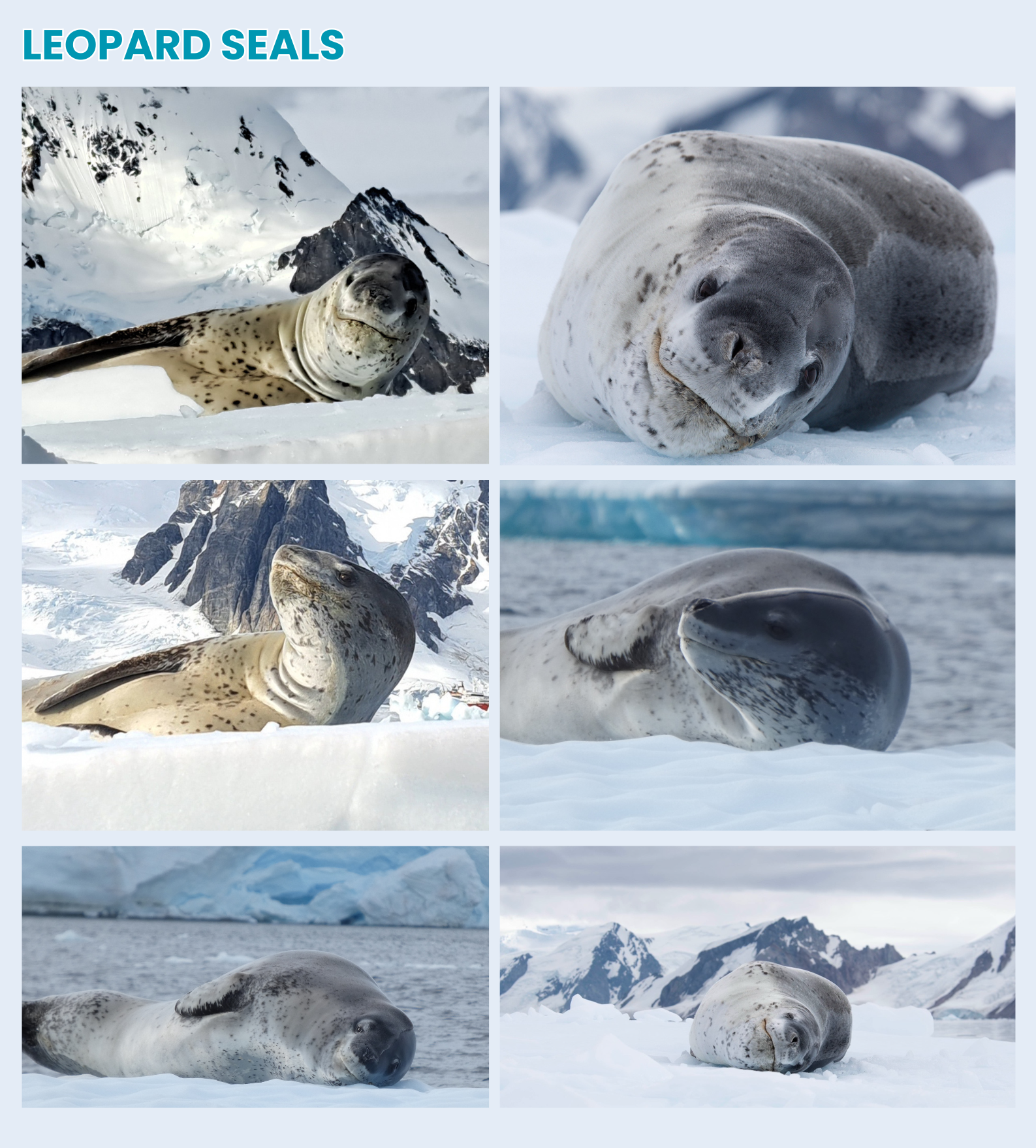
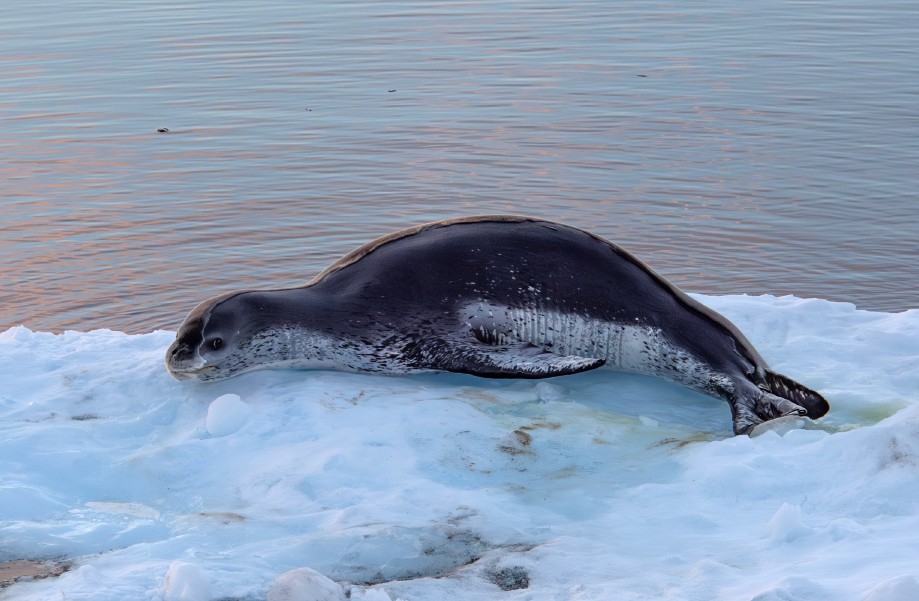
LEOPARD SEAL. It was one of the most expected animals. They are often found alone, resting on an iceberg with that calm, patient stillness of a predator that doesn’t need to rush. They wait for the perfect moment to hunt a penguin, and there’s something almost prehistoric about their face — that reptilian look that sets them apart from any other seal. One day, one of them followed our zodiac for several minutes. I don’t think it mistook us for prey, but it was clearly interested in something. And on a few beaches we saw the aftermath of their hunts: penguins shaken with such force by those powerful jaws that the head detaches, and the skin turns inside out like a used sock. They leave the bones perfectly clean on the shore. It’s brutal, yes, but also part of the raw, unapologetic nature of this place.
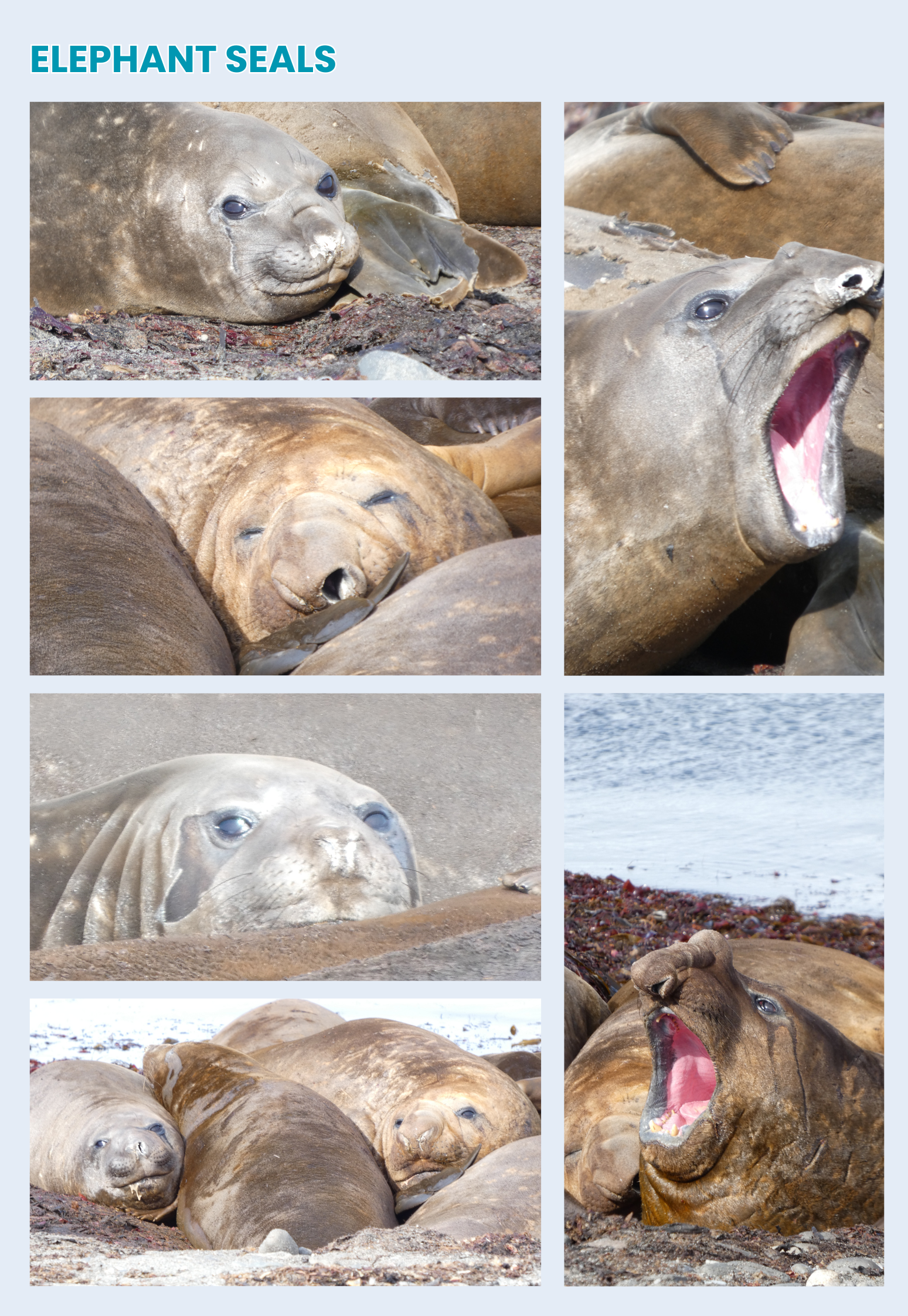
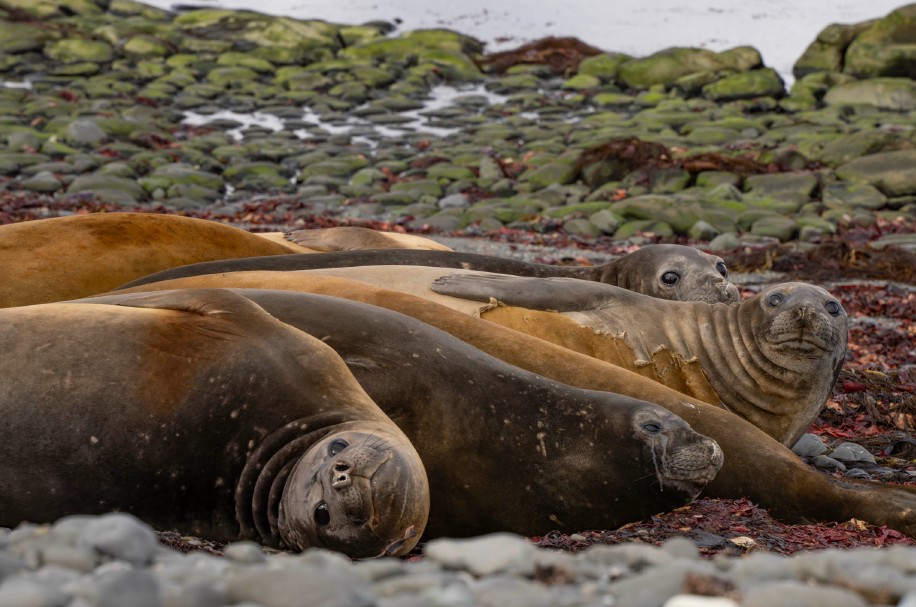
ELEPHANT SEAL. We saw them at President Head, on Snow Island — the last piece of Antarctic land we set foot on. They were piled up on the beach in a heavy, sleepy mass, resting quietly, snoring and sniffling. The pups in the middle of their moult, with their curious, almost smiling faces, were a funny contrast to the deep grunts and rumbling complaints of the males as we approached. They’re such enormous, shapeless creatures that it seems impossible they can move at all, and yet somehow they do.
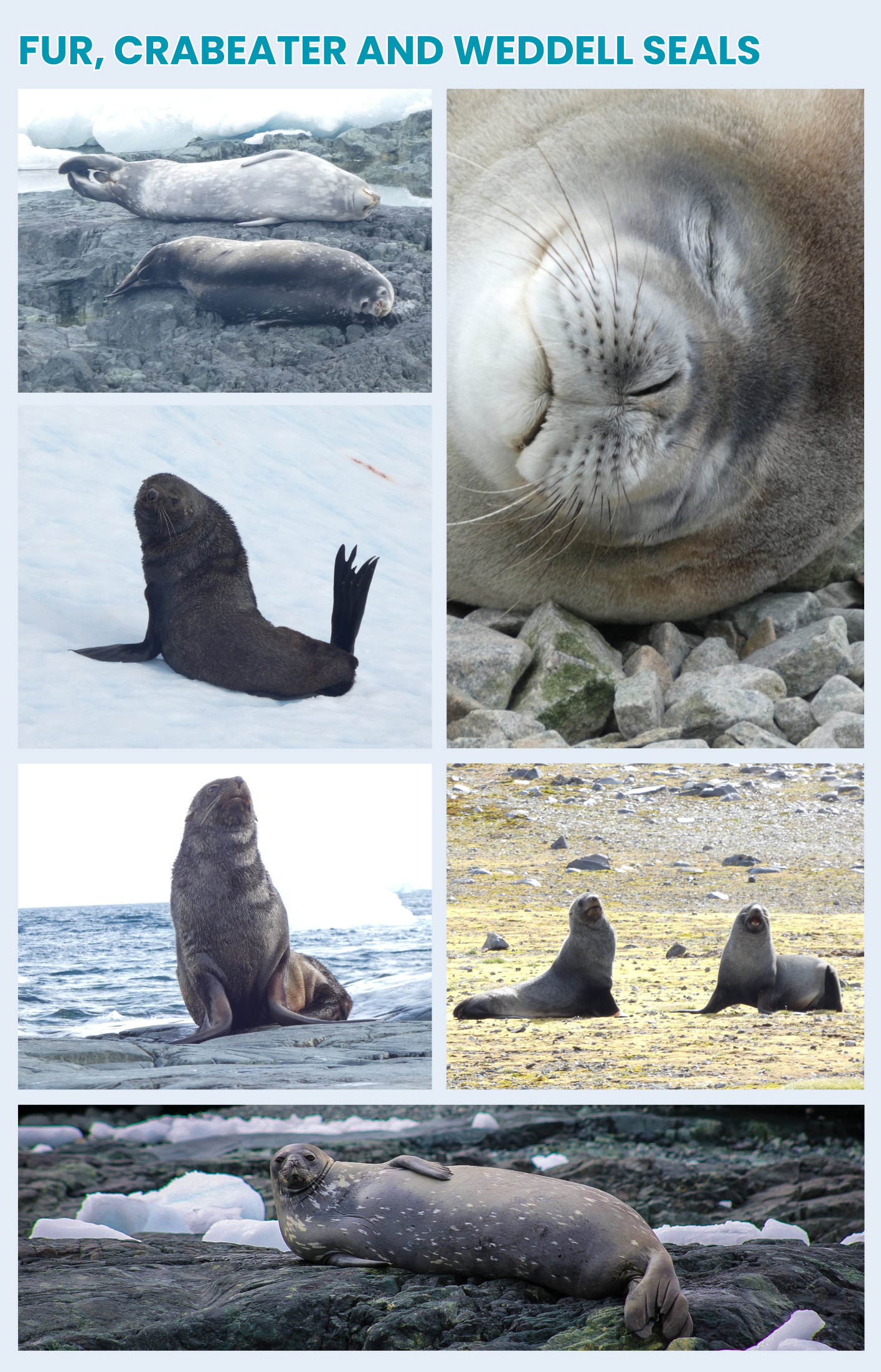
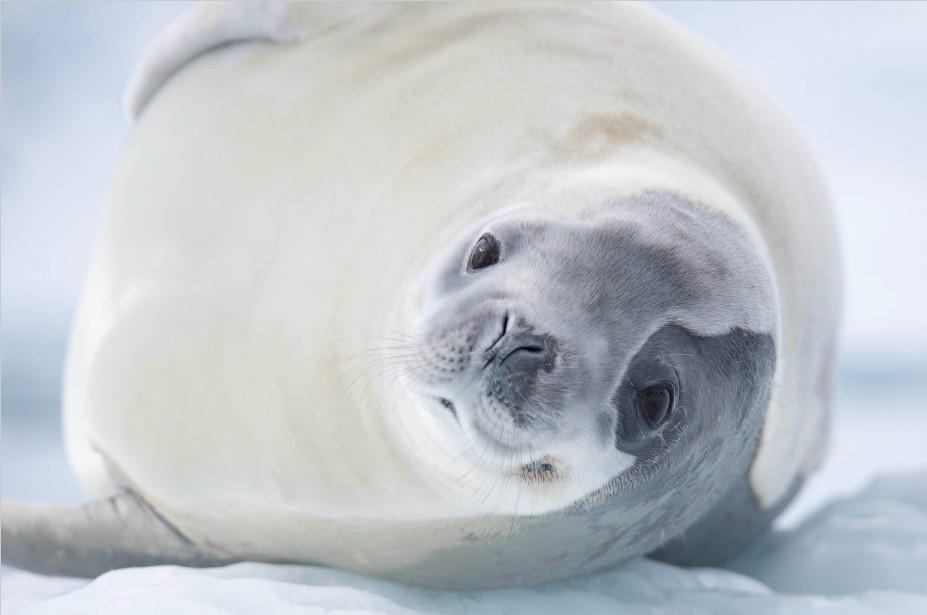
I would like to mention the rest of seals, CRABEATER SEALS, FUR SEALS and WEDDELL SEALS, that seem to coexist in this frozen world with all the penguins, sharing beaches and icebergs.
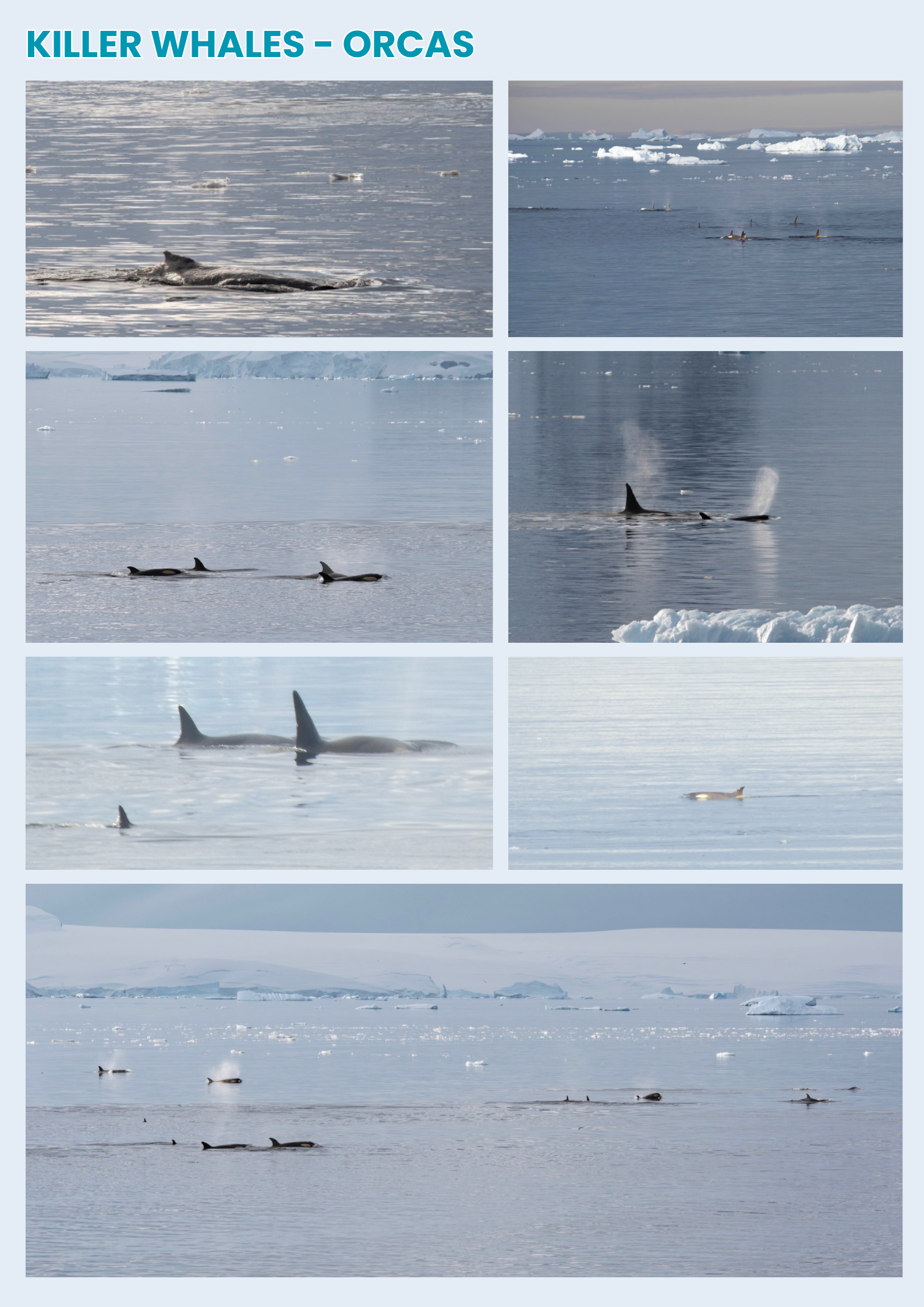
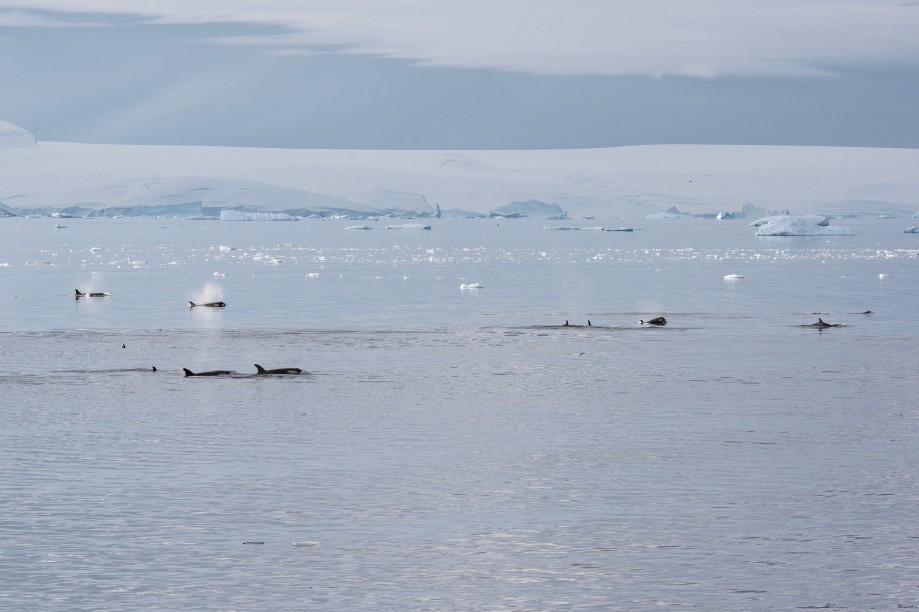
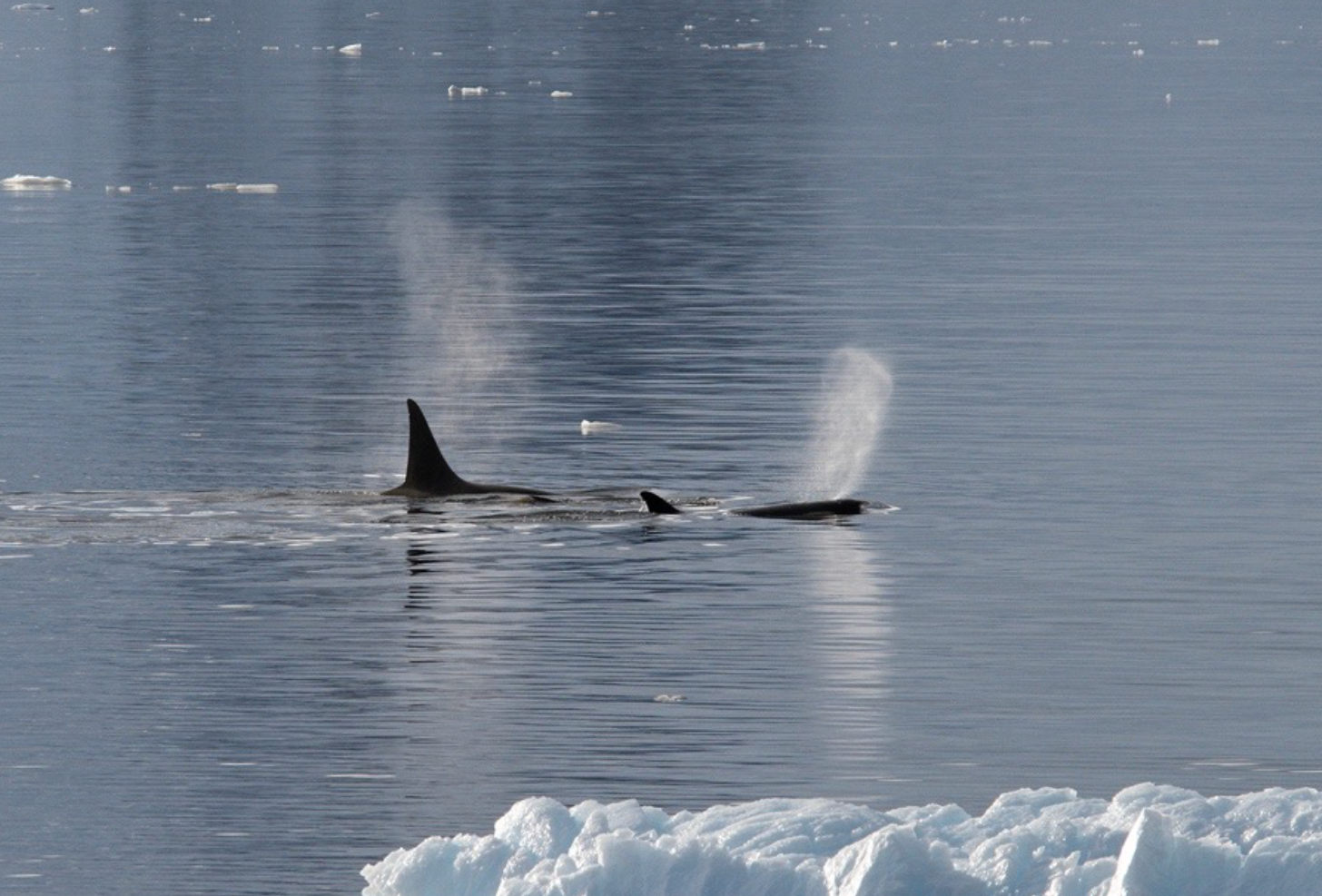
KILLER WHALES. The only killer whales we saw appeared just before entering The Gullet strait, at sunset, in a sea so calm it looked like liquid silver. A small pod of ten to fifteen individuals — including calves — moved slowly across the surface, sharing the same stretch of water with a lone humpback. Orcas are among the most majestic animals you can encounter, even more so when you think about their extraordinary intelligence and skills. Watching them glide in perfect silence, perfectly in control, you understand why they’re considered the true rulers of the sea.
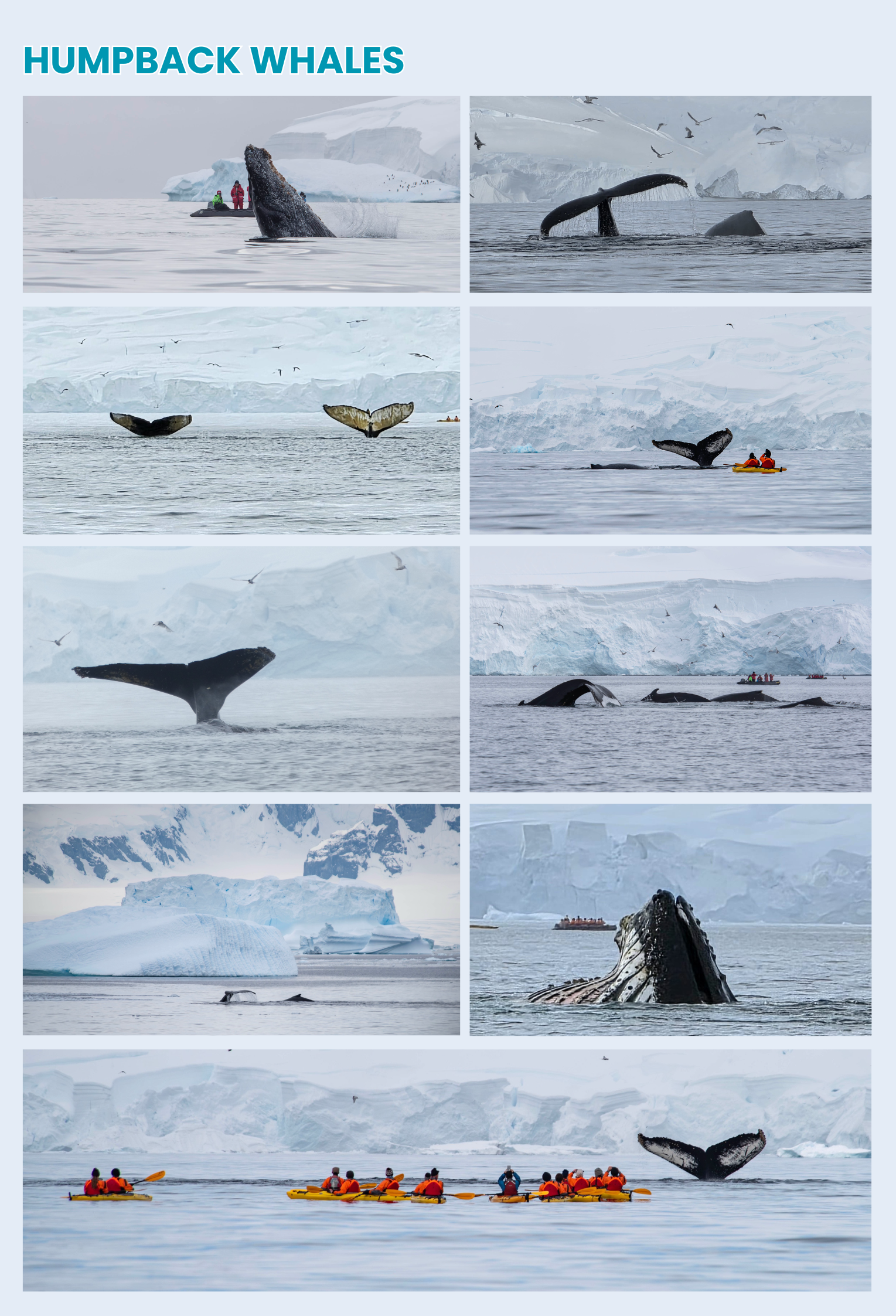
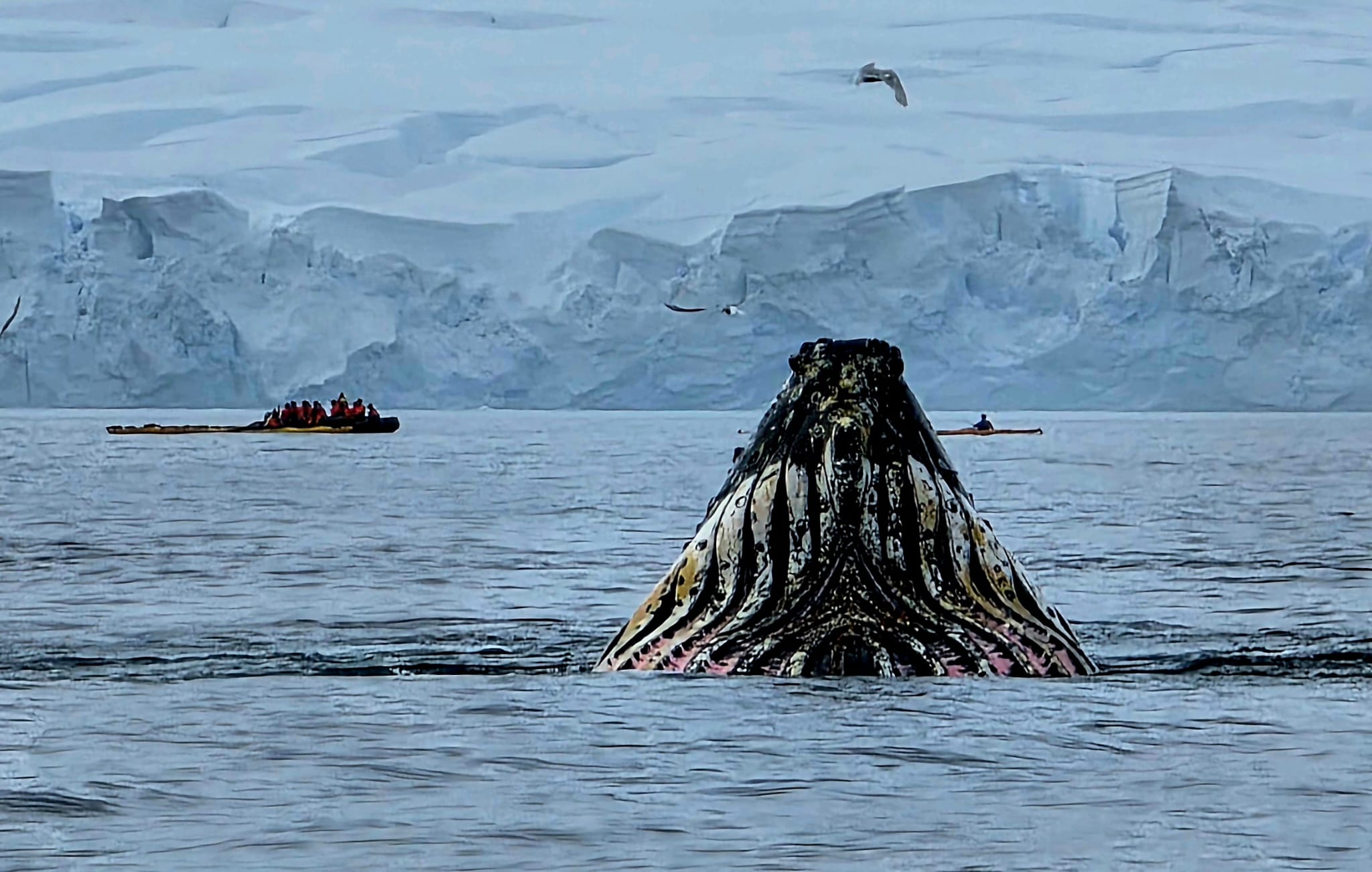
HUMPBACK WHALES. We saw quite a few humpback whales along the way. It’s always a pleasure to watch them swim peacefully, showing their backs and dorsal fins, and the blow spray of their breathing, but the best moment is always the same: when they dive deep and lift their tail (fluke is the proper name) out of the water in all its splendour. Each tail is unique — the cuts, the markings, the patterns — and these are the clues researchers and observers like us use to identify individual whales and track their movements across the oceans. In Fournier Bay we were incredibly lucky. We were able to approach them in the zodiacs, always keeping a respectful distance, of course, but close enough to watch how they feed. First they dive down into the depths, then rise in a spiral, releasing streams of bubbles that push small fish and krill towards the surface. And finally they appear with their mouths wide open, swallowing everything in their path. You see it in documentaries and it amazes you; seeing it in person is something else entirely — it leaves you in absolute awe. We even saw a few of them slapping the surface with their enormous pectoral fins, as if playing or communicating with one another, adding yet another layer of wonder to the whole scene.
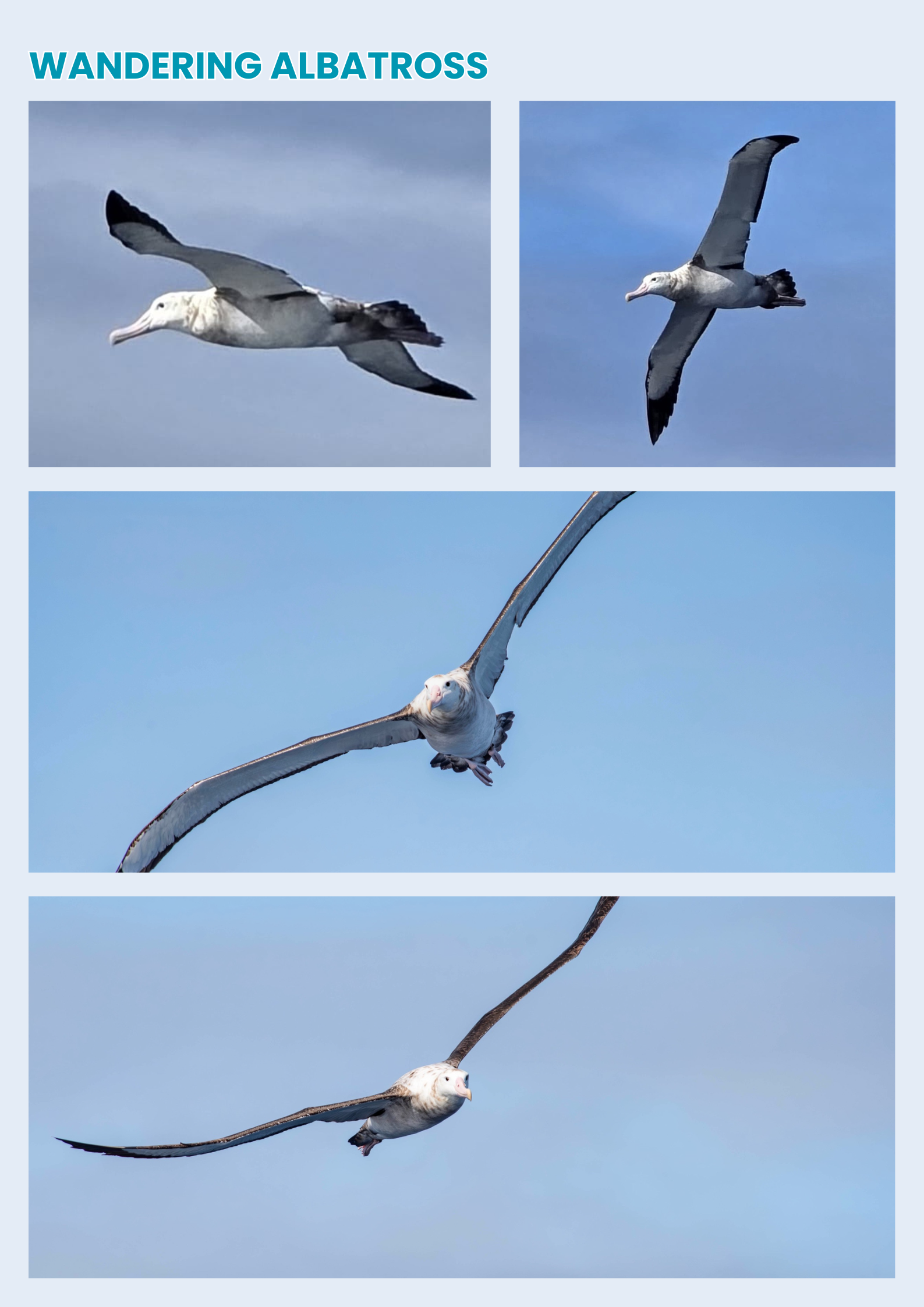
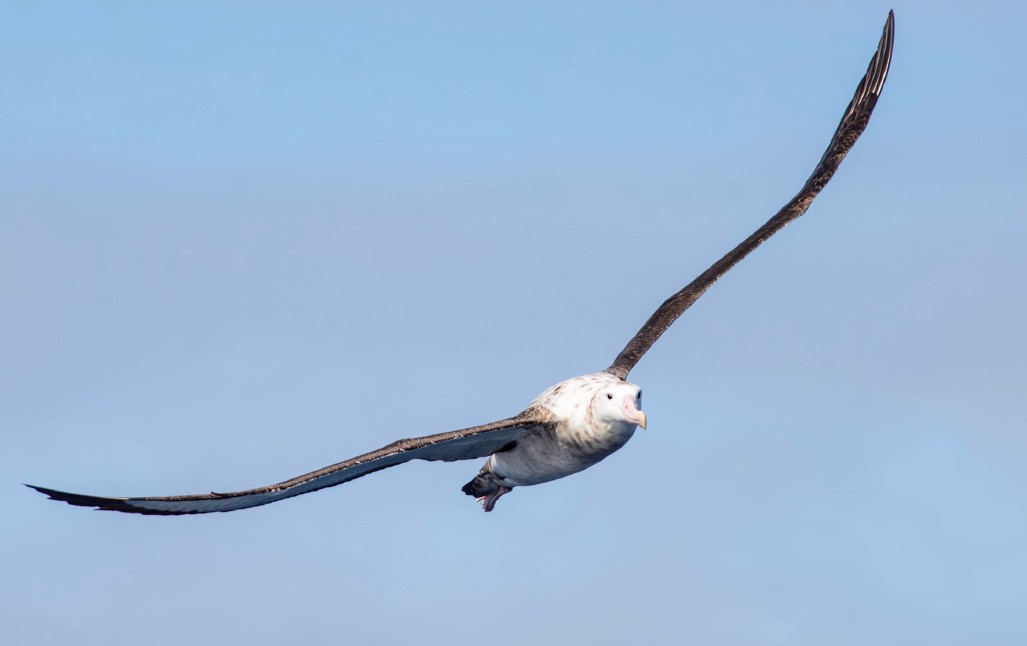
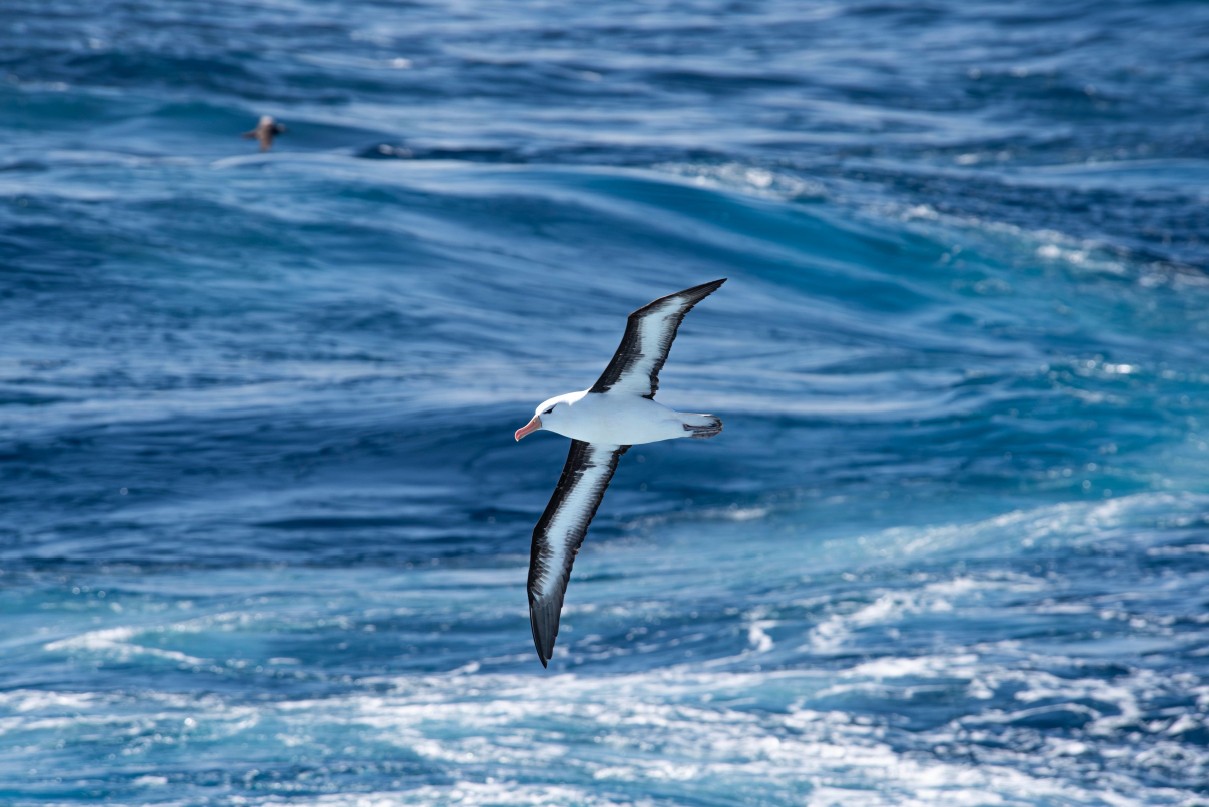
WANDERING ALBATROSS. This was the largest bird we had the chance to see. They don’t inhabit Antarctica itself, so we spotted them out in the open ocean, as we left the Beagle Channel and again on our way back. They’re truly majestic — with their wings fully extended, their span can reach more than three metres — and they spend most of their lives gliding across vast distances circumnavigating the Southern Ocean. Watching one soar effortlessly above the waves, barely moving its wings, gives you a sense of just how perfectly adapted they are to this endless, wind‑driven world.
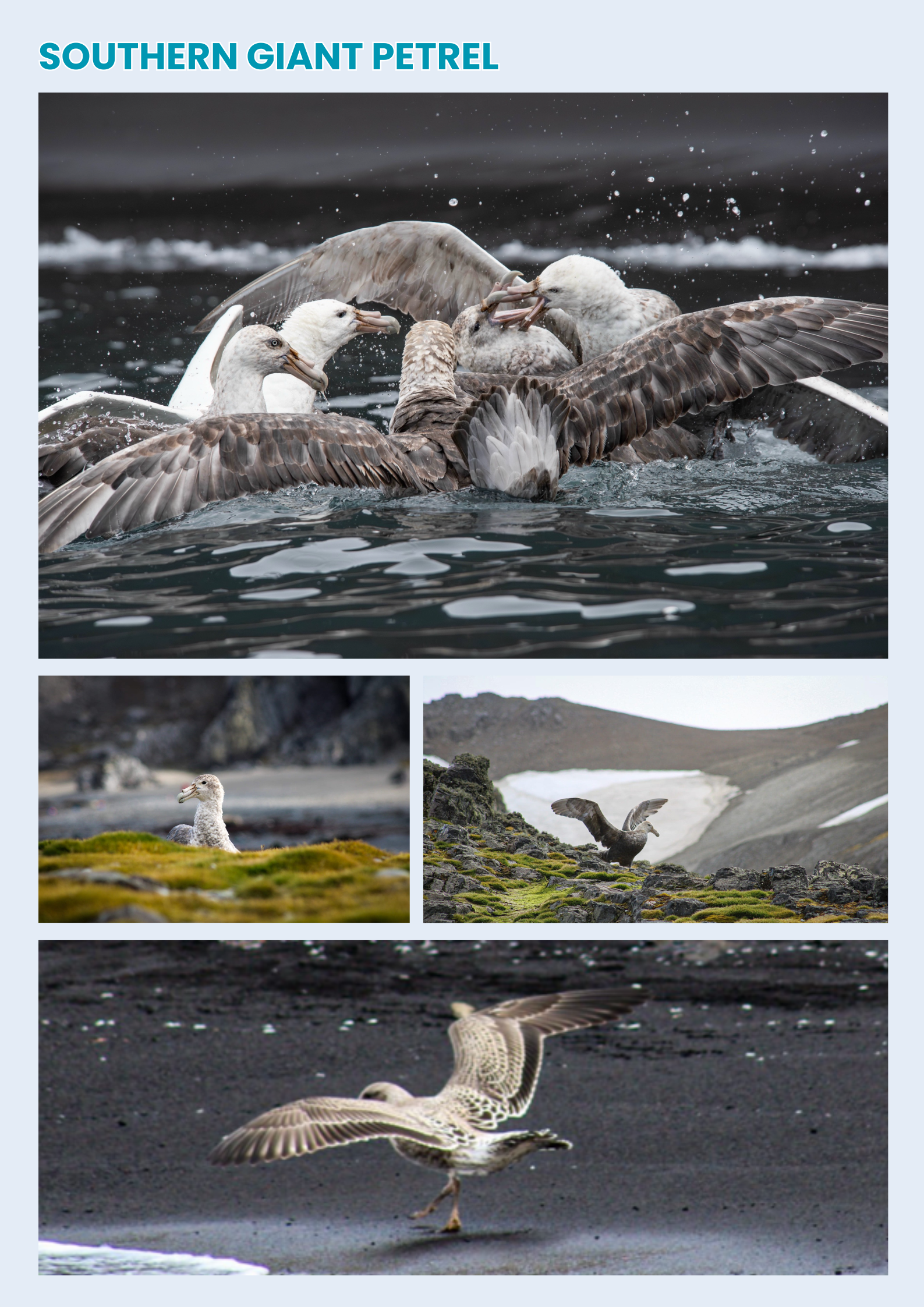
SOUTHERN GIANT PETREL. I have mixed feelings about the Southern Giant Petrel. On Deception Island we witnessed, firsthand, a group of these huge birds attacking a young penguin that seemed injured, because it didn’t even try to escape. It fought back for a while — facing them, crying out, flapping its small wings in a desperate attempt to defend itself — but there was nothing it could do against such a determined flock of scavengers. I couldn’t watch the whole scene. I know it’s part of nature, the food chain doing what it has to do, but it’s not something you take in easily, nor something you forget quickly.
And of course, all the cute PENGUINS:
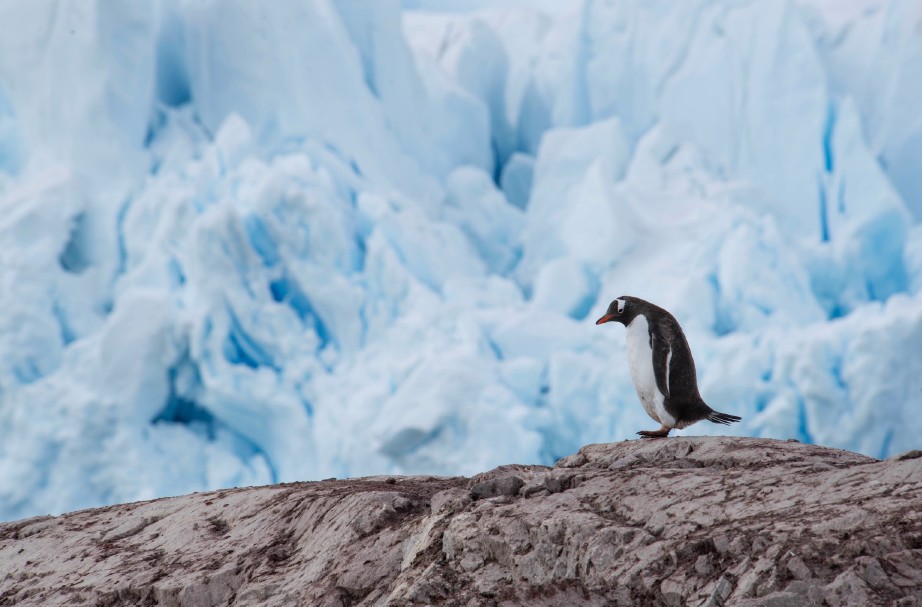
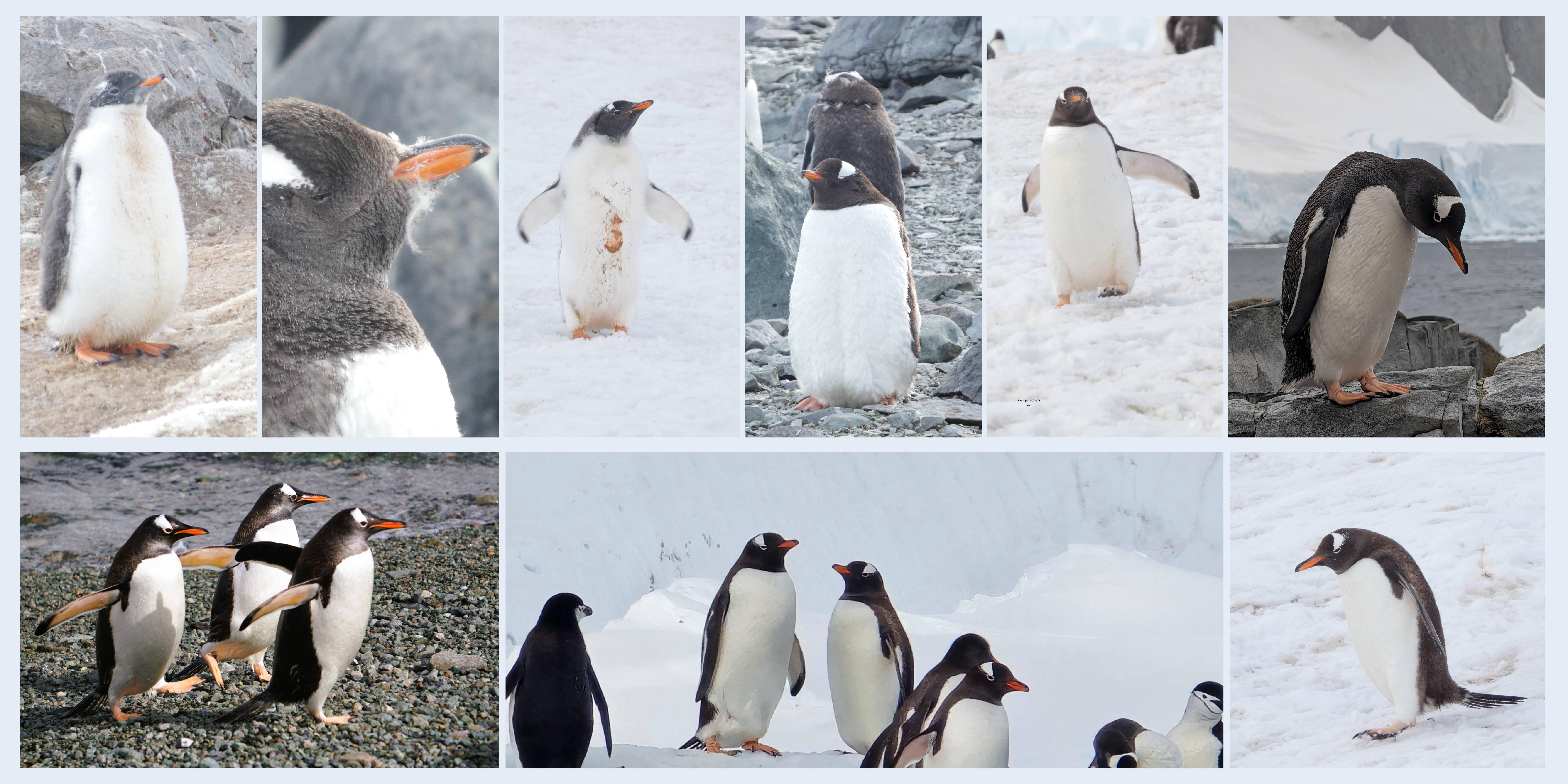
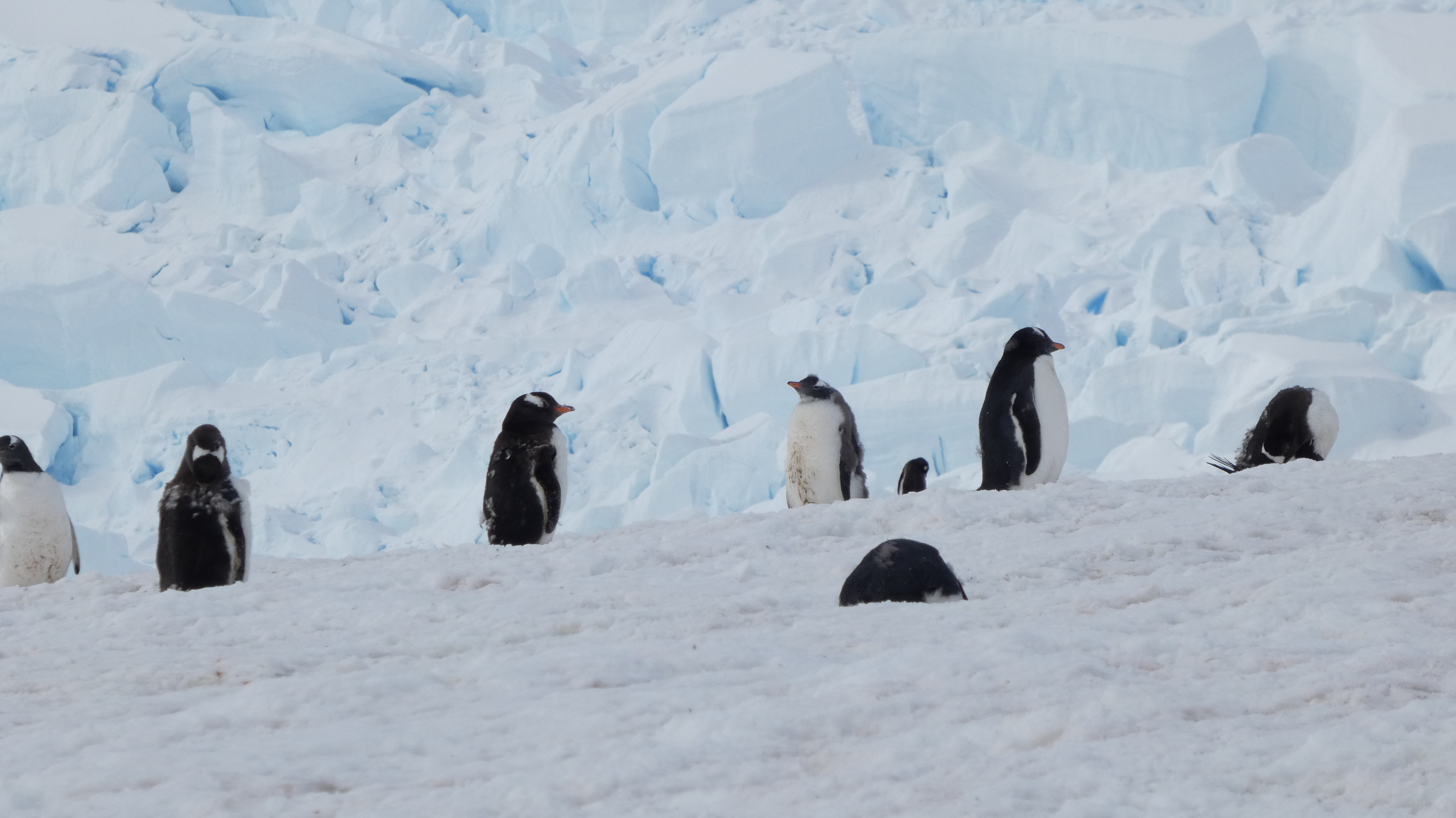
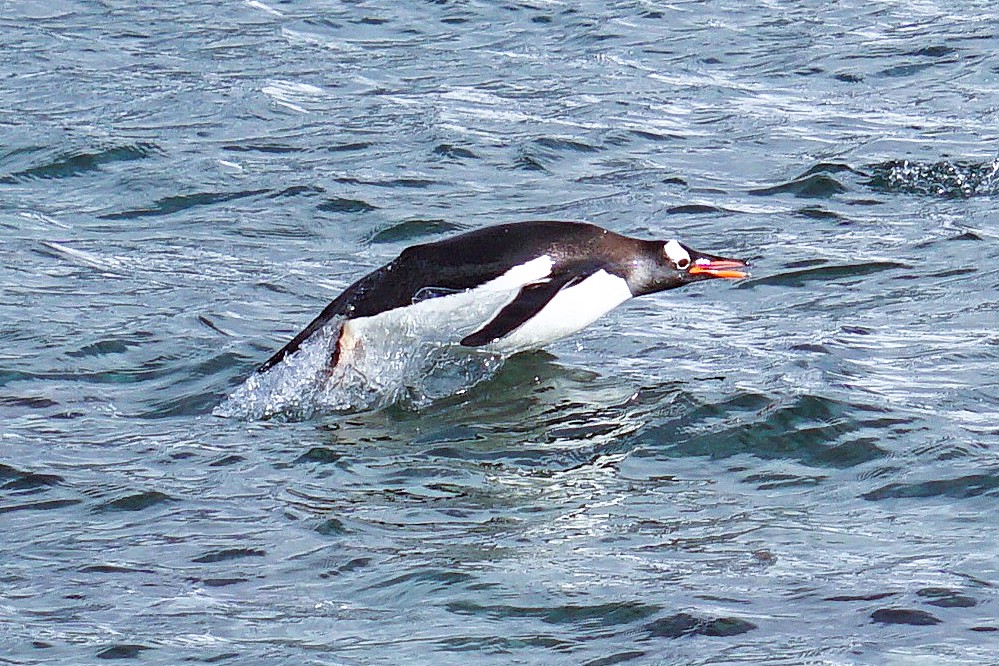
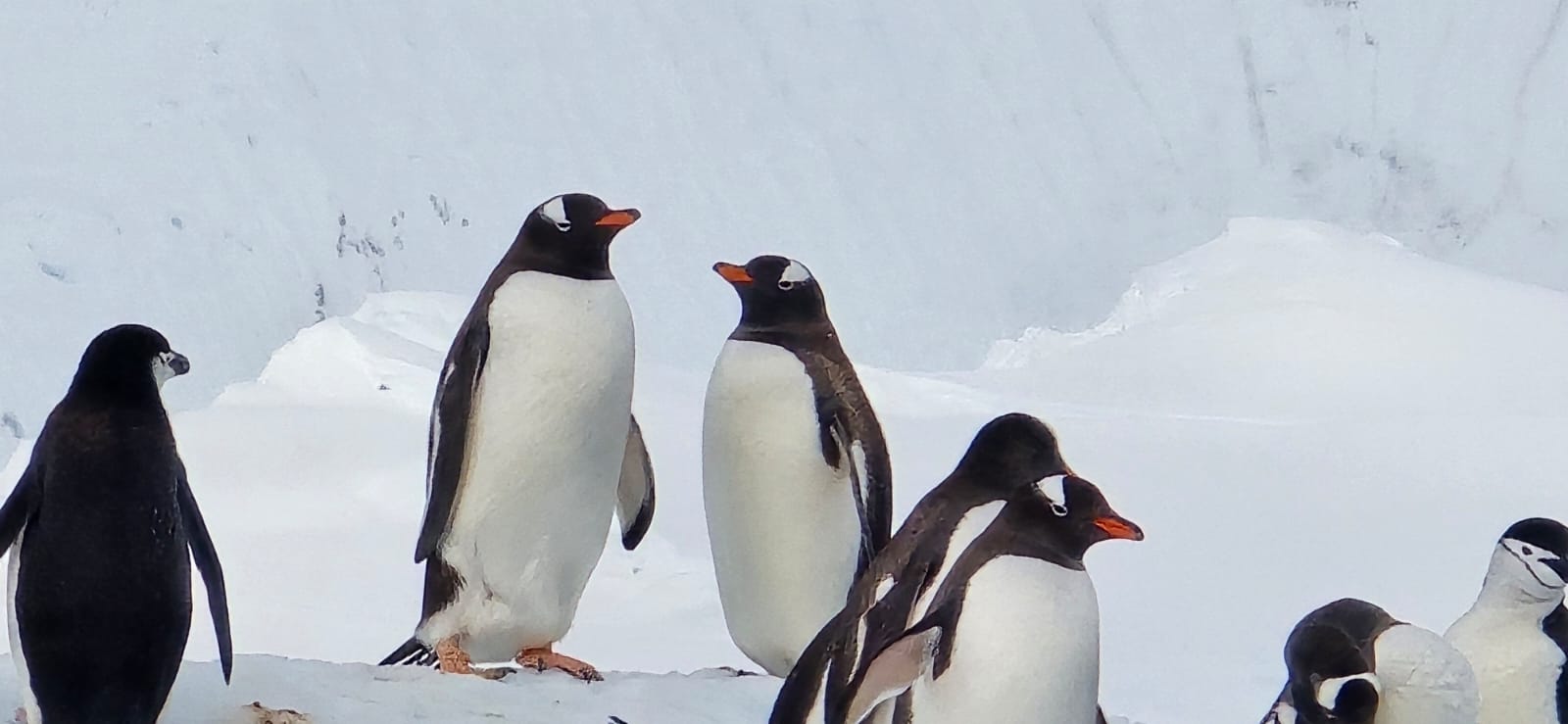
Gentoo penguins are probably the most expressive and charming of the three. You can spot them instantly by their bright orange beak and the white band across their head, like a little headband. They waddle around with purpose, always looking as if they’re late for something. Their colonies are busy, noisy and full of movement, and they’re the fastest swimmers of all penguins — a fact that feels almost ironic when you watch them struggle with the simplest slopes on land.
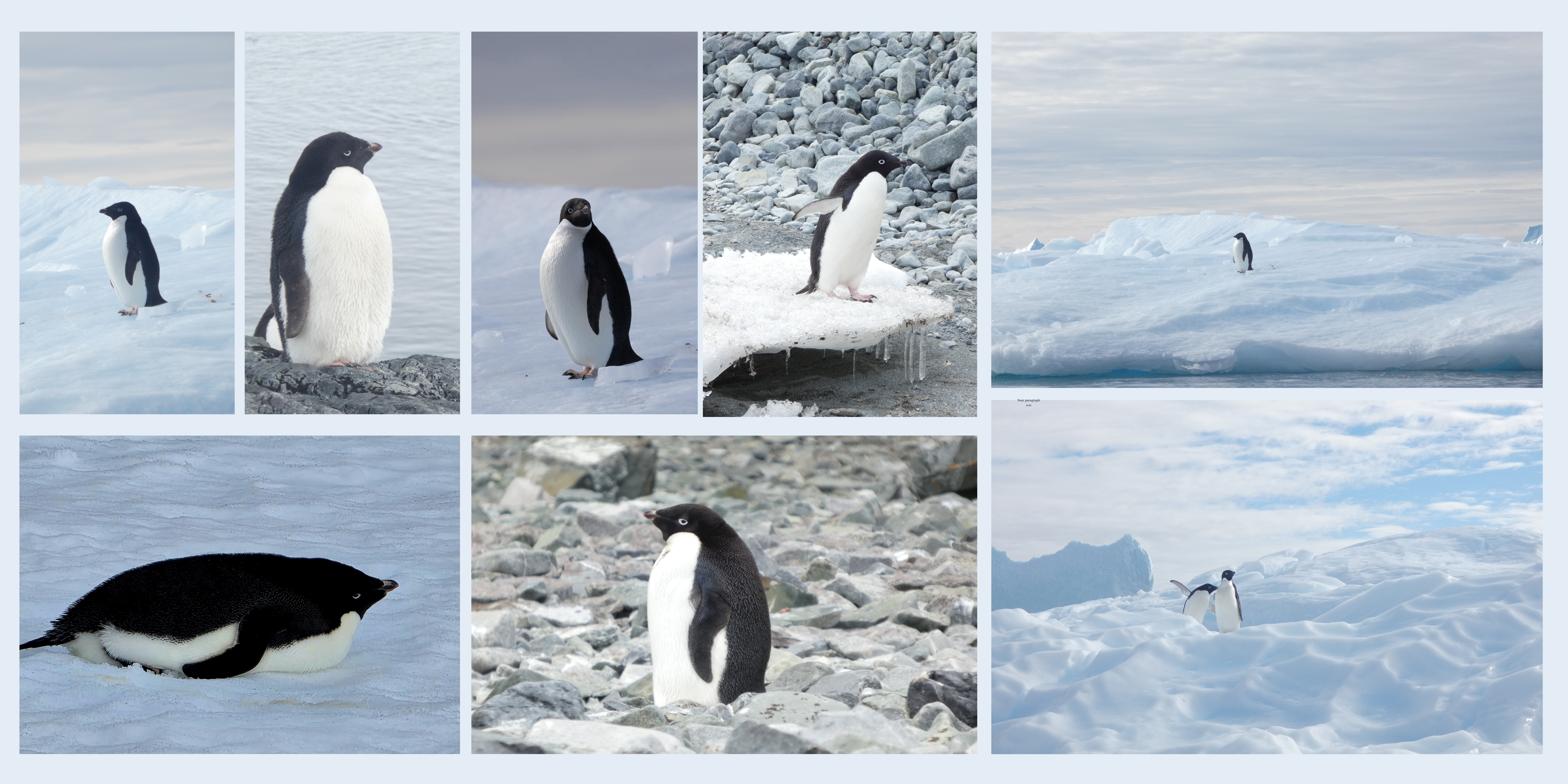
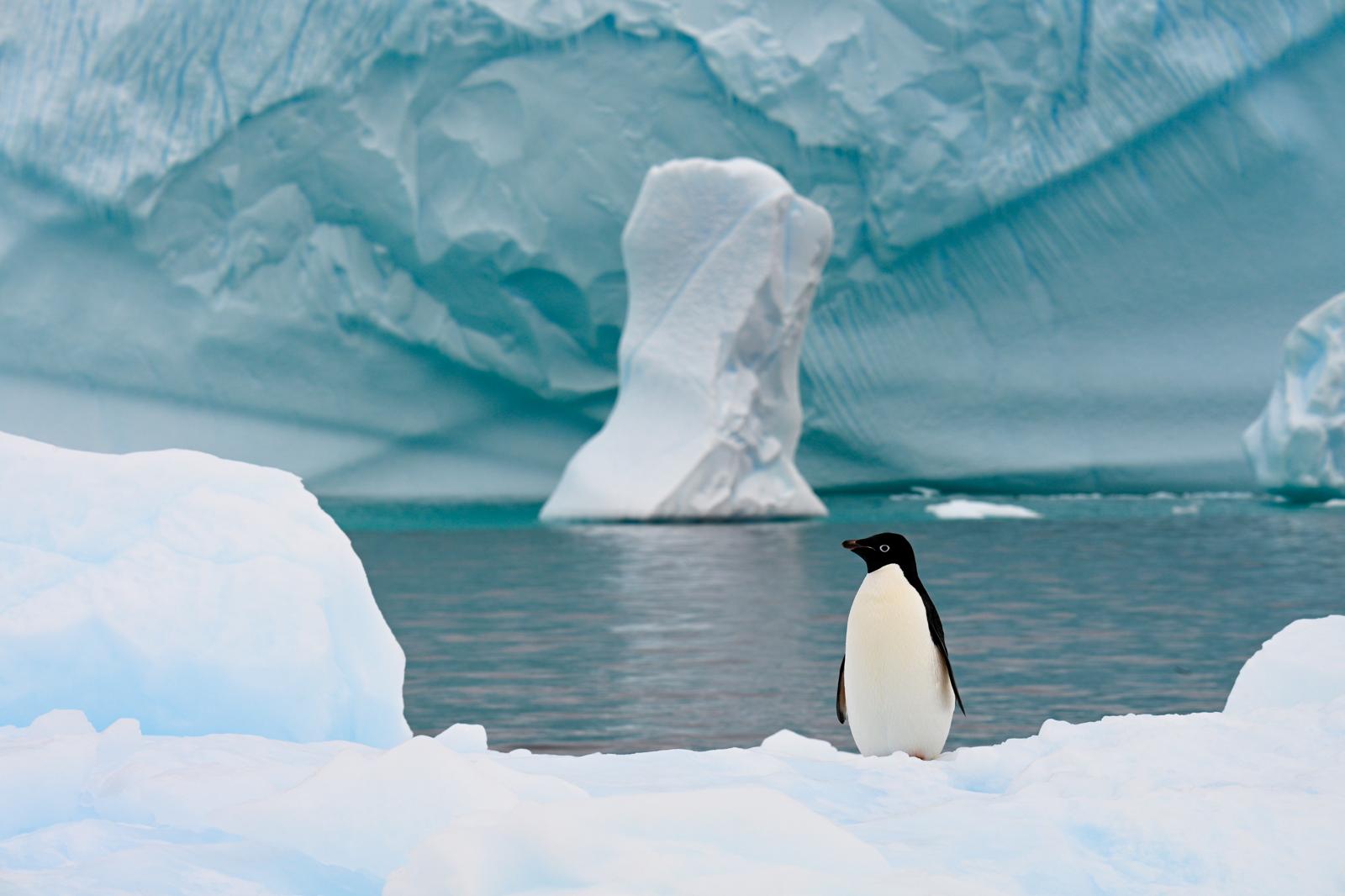
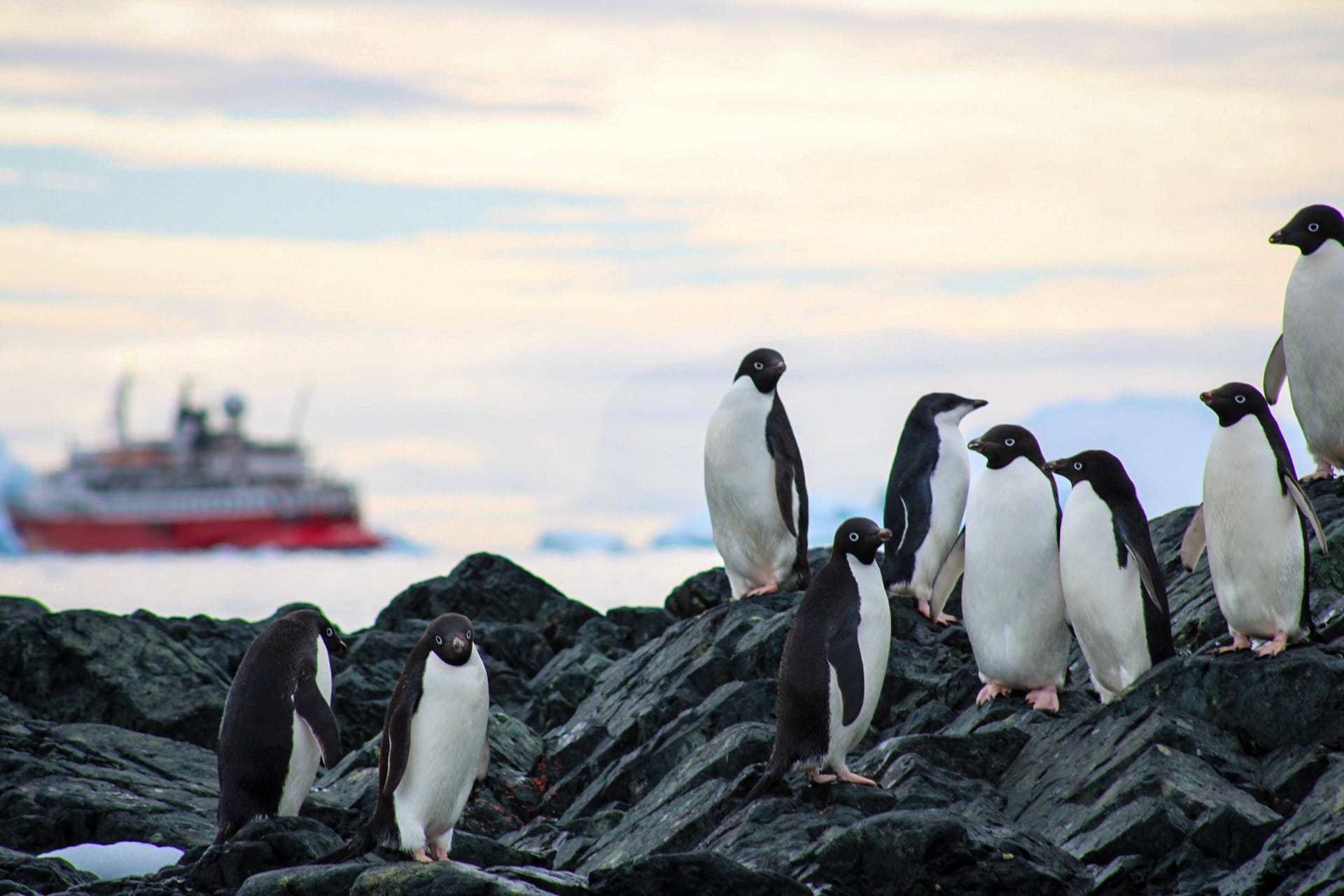
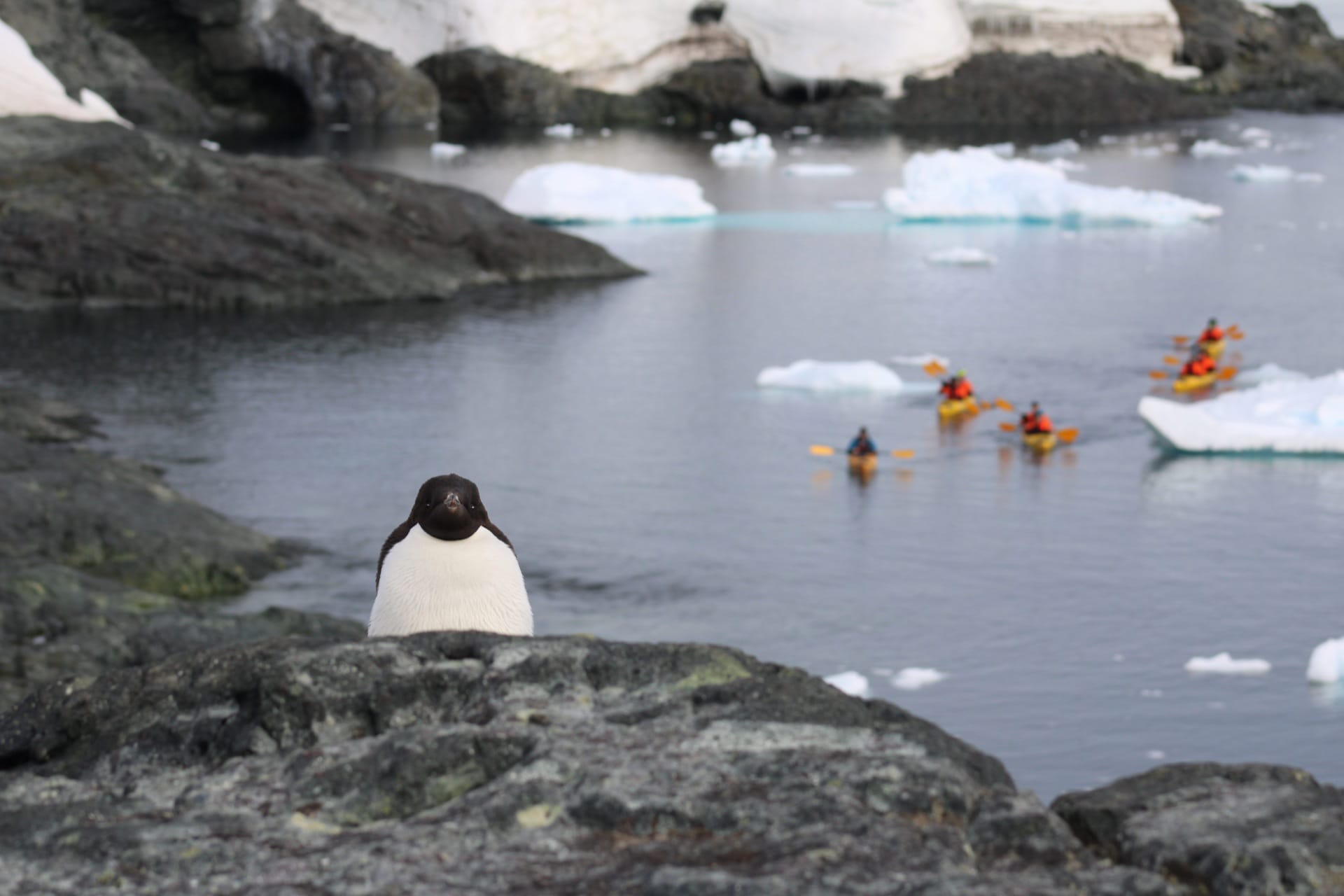
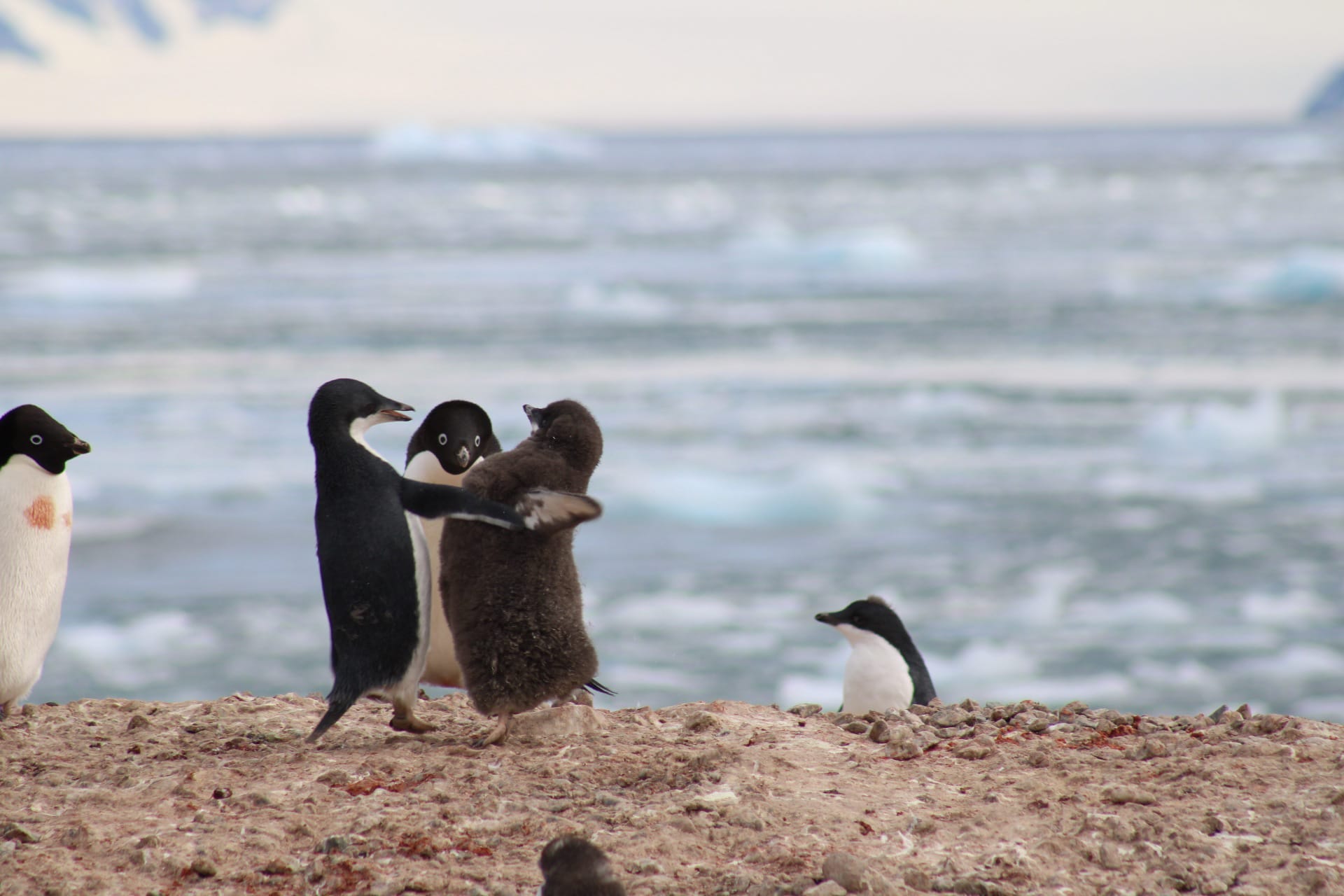
Adélies are the “classic” penguin shape — round, black‑and‑white, with those completely black eyes that give them a permanently surprised expression. They’re smaller and much more restless than gentoos, always moving in groups, pushing each other, reorganising themselves. They’re incredibly tough: they live farther south than almost any other species and endure conditions that would be unthinkable for us.
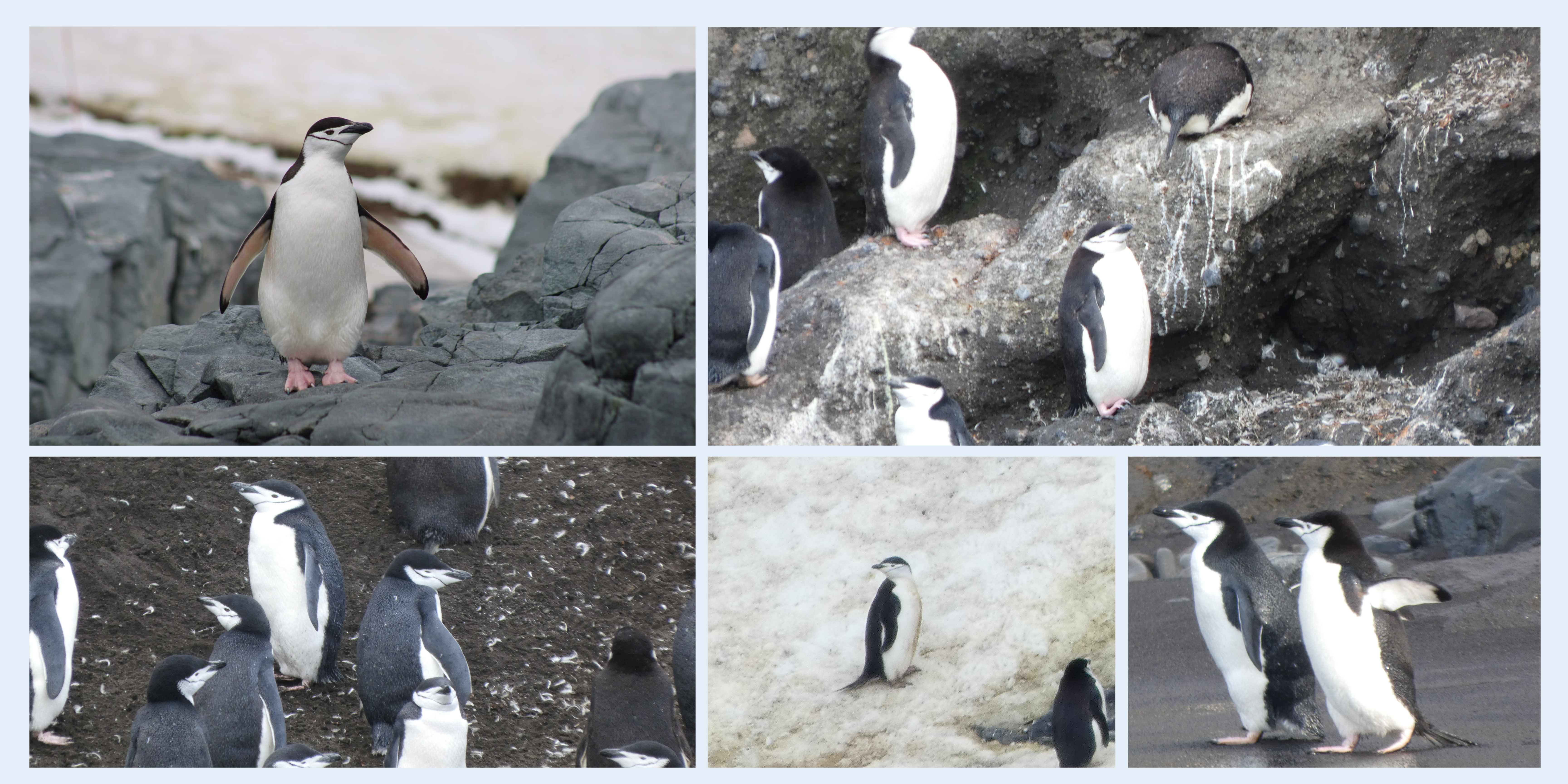
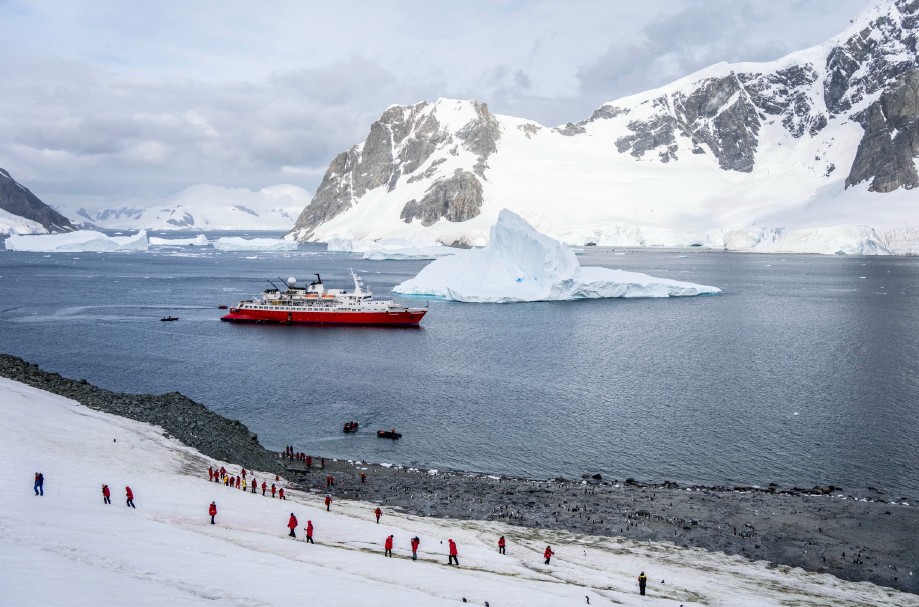
Chinstraps are unmistakable thanks to the thin black line under their chin, which looks like a crooked smile or a mischievous grin. They’re compact, energetic and very vocal. They’re excellent climbers — far better than gentoos or adélies — we saw them on Deception Isladn perched on steep slopes that seem completely unreasonable for a penguin.

Penguins return to Antarctica in summer because it’s the only moment of the year when conditions allow them to breed. The days are long, the temperatures are less extreme, and the sea ice retreats enough for them to access open water — essential for feeding themselves and their chicks. Summer also brings an explosion of krill and small fish, which makes it the perfect season to raise hungry babies. Contrary to what you might imagine, penguins actually look for solid ground — not ice — when it’s time to nest. They collect small stones and build a raised platform where the male and female take turns incubating the egg. Once the chick hatches, they continue alternating roles: one stays behind to protect it, while the other heads out to sea to fish and then feeds the chick by regurgitating partially digested food.
By the time we arrived, near the end of the summer, the chicks were already big and fluffy — some even larger than their parents, who leave them more freely to gather with other chicks. You could still recognise them by the patches of down clinging to their bodies, and especially by the constant chases after their exhausted parents, begging for more food. The adults’ daily commute to the sea creates what are known as “penguin highways” on the ice/snow, well‑trodden paths they all clumsy follow. You can watch them politely giving way to one another, and, as a curiosity, if you accidentally stand in their path, they won’t walk around you. They’ll simply stop and stare, as if saying: excuse me, you’re in my way. And the moment you step aside, they continue on their determined little journey.

· · · · · ·
The VESSEL MS Expedition
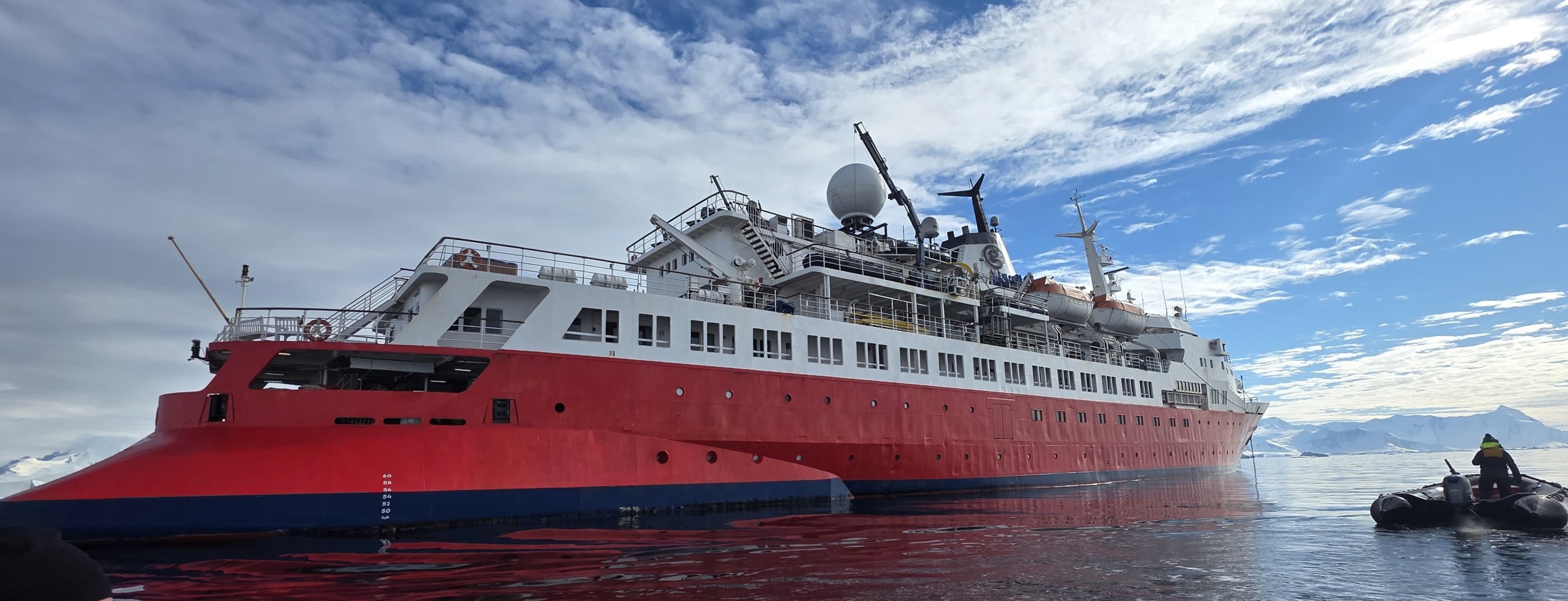
The MS Expedition is a classic, ice‑strengthened expedition vessel operated by G Adventures, designed specifically for polar travel. It’s one of the most popular small ships for traveling to Antarctica because it balances comfort, safety, and a genuine expedition atmosphere — without unnecessary luxuries, but with everything you need to experience the journey to the fullest.
It carries around 130 passengers, which makes it the ideal size for navigating among icebergs and maneuvering easily through narrow passages to reach more remote places that larger, more luxurious ships simply can’t access. That’s a huge advantage on a trip like this, where you want to reach the most isolated and cleanest places. There’s a saying that on other ships, the ship is the destination — while on the MS Expedition, the ship takes you to the destination.
And because of its limited capacity, it can offer two landings per day — sometimes even three (you’ll see this in the daily journal). Larger ships, however, must operate in shifts because no more than 100 people are allowed ashore at the same time. This means you may have to wait on board for hours until it’s your turn.
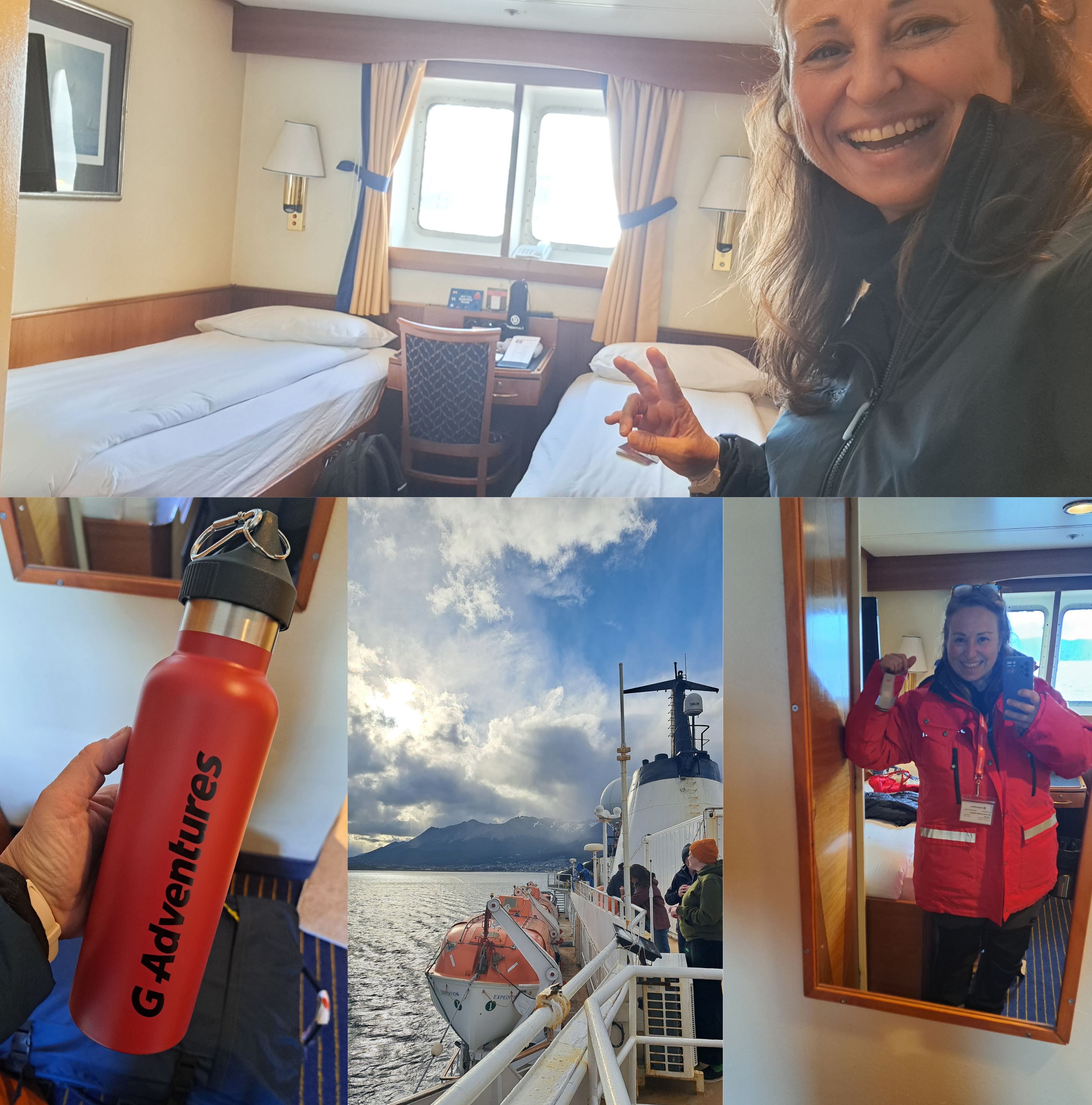
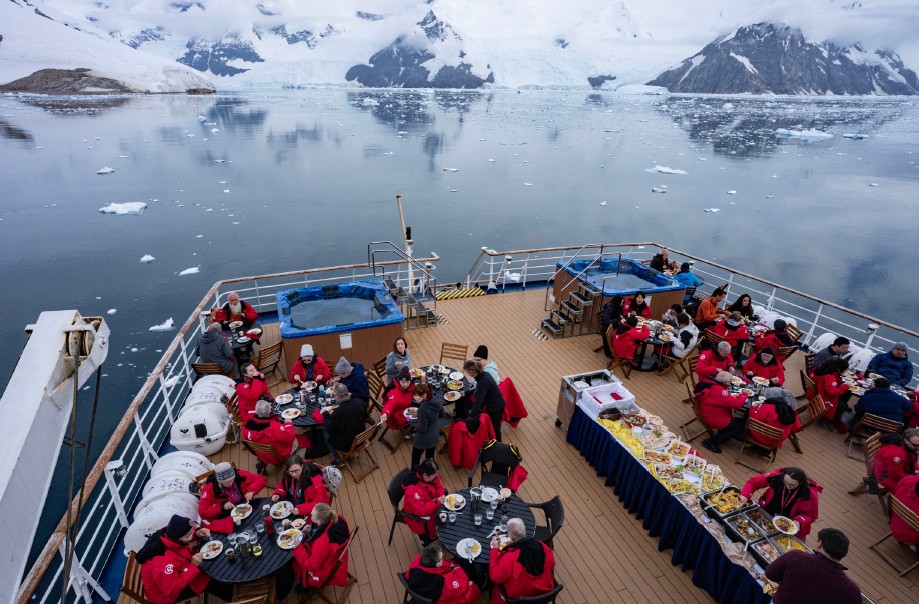
The different cabin categories make it reasonably accessible for many budgets, ranging from the Captain’s Suite to the triple porthole rooms which, if you want to reduce costs, you can also share with other travelers. All cabins have a private bathroom, TV, wardrobe, hairdryer, and a desk. Other facilities include a gym; two outdoor jacuzzis on the aft deck; a well‑stocked library filled with books on expeditions, wildlife, and nature; the dining room; the reception area where important information is posted; and the lounge where the lectures take place, complete with a cocktail bar and a 24‑hour station with tea, coffee, and cookies. The focus is on your comfort, but without unnecessary luxury. The priority is the wildlife and the landscapes, so whenever possible, you’ll spend more time outside than inside.
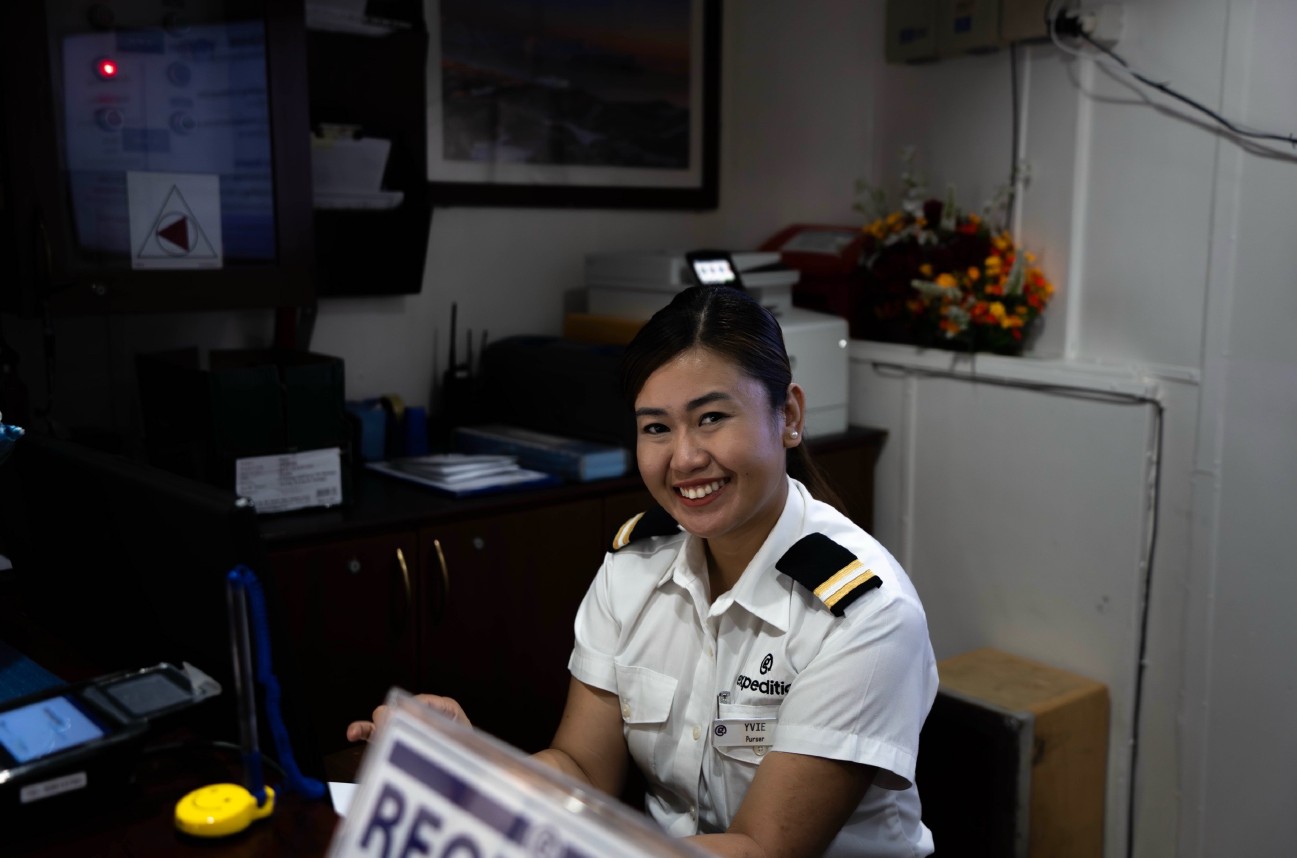
One of the most important spaces on the ship is the mudroom. You have to pass through it every single time you go ashore. It’s the place where your boots are disinfected and where you check out before leaving the ship and check back in when you return. That room was always a party. There were always smiling faces, even if you came back completely soaked, tired, and hungry — it was a constant feeling of satisfaction.
The ship was run by an exceptional team — from the bridge, where the captain and his officers worked with absolute professionalism, to the maintenance crew, who kept everything in perfect condition (not a single lightbulb missing, not a single detail out of place). The sailors, of course, but also the doctor, the kitchen staff, the waiters, the reception team, and the cabin attendants. It was impressive how, if you wanted, they could tidy your cabin both in the morning and again in the afternoon — something that felt almost excessive to me, so I preferred to give them those extra minutes of rest and make my own bed and straighten things up a bit. Kind doesn’t even begin to describe them; their level of warmth and helpfulness was truly extraordinary.


· · · · · ·
The expedition guides AND THE LECTURES
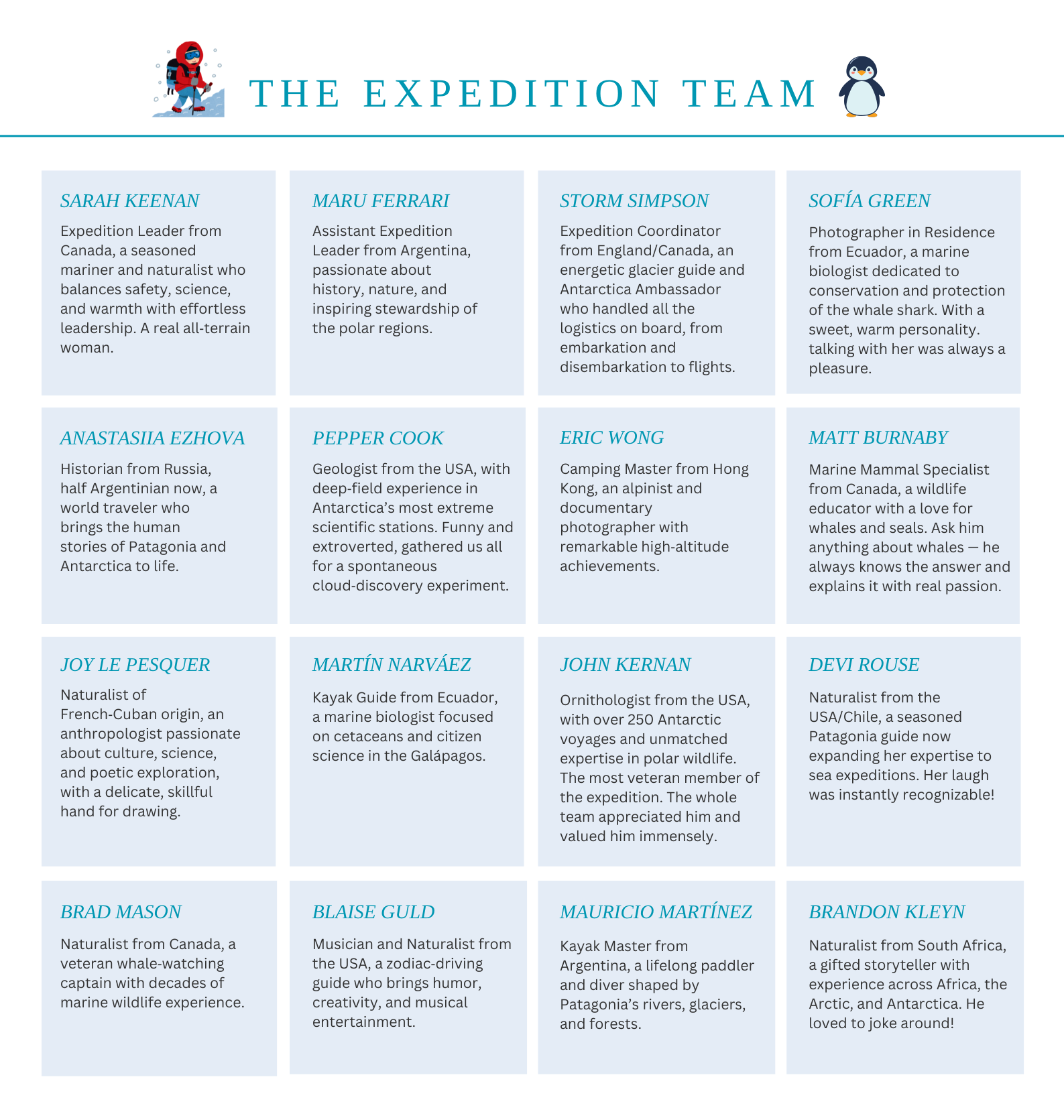
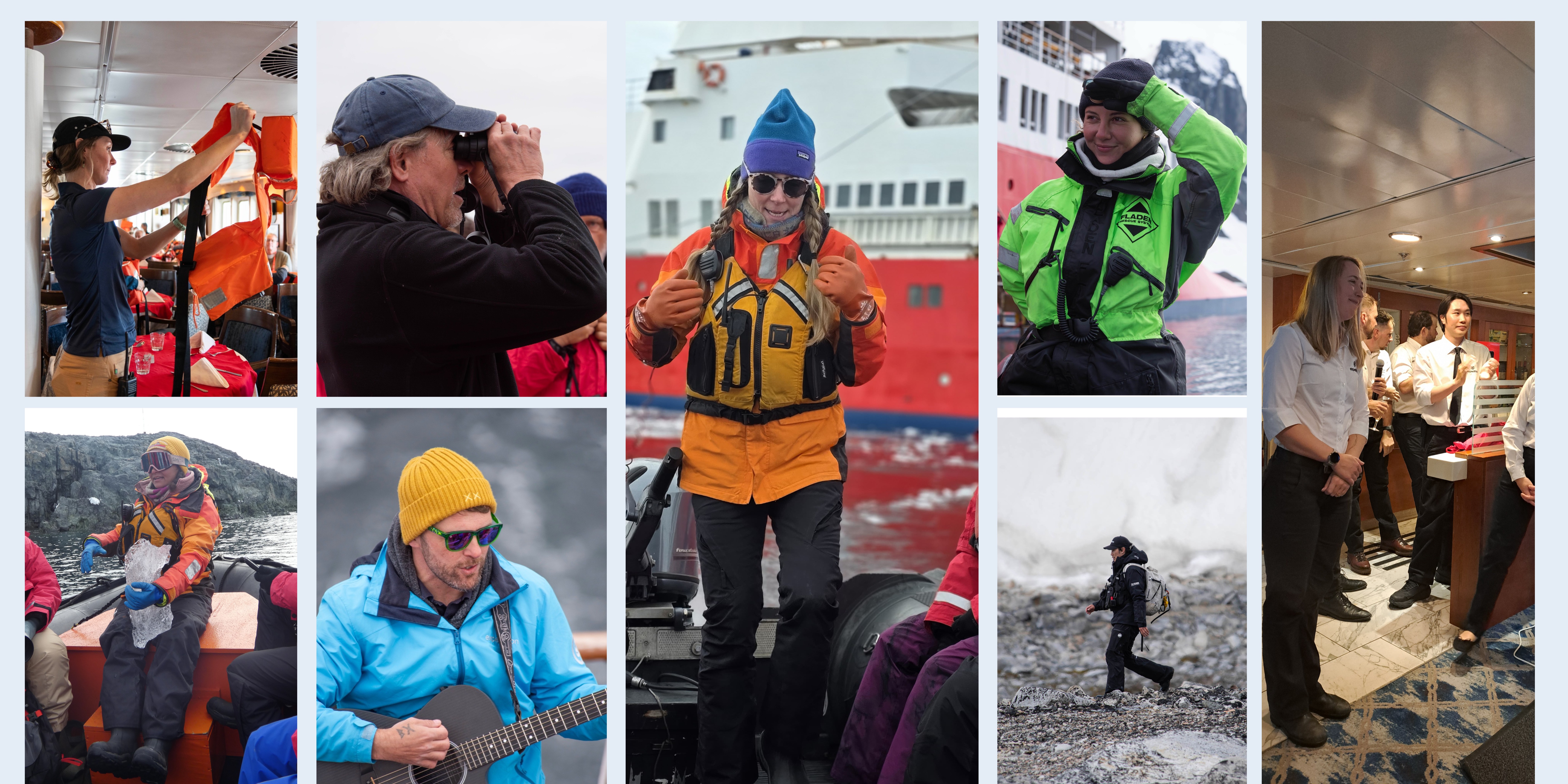
The expedition team on board was a multidisciplinary, deeply experienced, and remarkably international group, united by a shared passion for the polar regions, education, and conservation. Sixteen people in total — fifteen guides and one expedition leader — many of whom have spent years, often decades, working in remote, harsh, or highly specialized environments, from Antarctica and the Arctic to Patagonia, the Amazon, the Himalayas, and the Galápagos.
They came from every field you can imagine: marine biologists, geologists, ornithologists, naturalists, and historians. Many had worked in research stations, conservation projects, or citizen‑science programs. Apart from their expertise in their own disciplines, they knew a bit of everything: skilled in zodiac driving, weather interpretation, animal behavior, kayaking, ice climbing, first‑aid, and more. And on top of all that, they were incredibly friendly, outgoing, and funny — natural entertainers who made every day brighter. Some of them delivered fascinating lectures on their areas of expertise.
Sarah, the expedition leader, set the tone for the entire voyage. Together with the captain, she defined the route based on weather and sea conditions, deciding how flexible or adventurous the itinerary could be. For example, they chose to head straight south at the beginning and then work their way north to avoid a storm system. She also selected the landing sites for each day, assessing risks and ensuring that all safety protocols were followed at all times.
She and Matt founded the Rogue Wave Expedition Academy, and you could feel their protective, mentoring presence with the younger guides on board, helping them grow with pride. Sarah’s sweet voice was the first thing you heard every morning — “Good morning everyone, gooood morning on board Expedition” — and she delivered most of the announcements throughout the day.
Know more about the expedition team. Find here their complete profiles, but this is just a short introduction:
· · · · · ·
The logistics
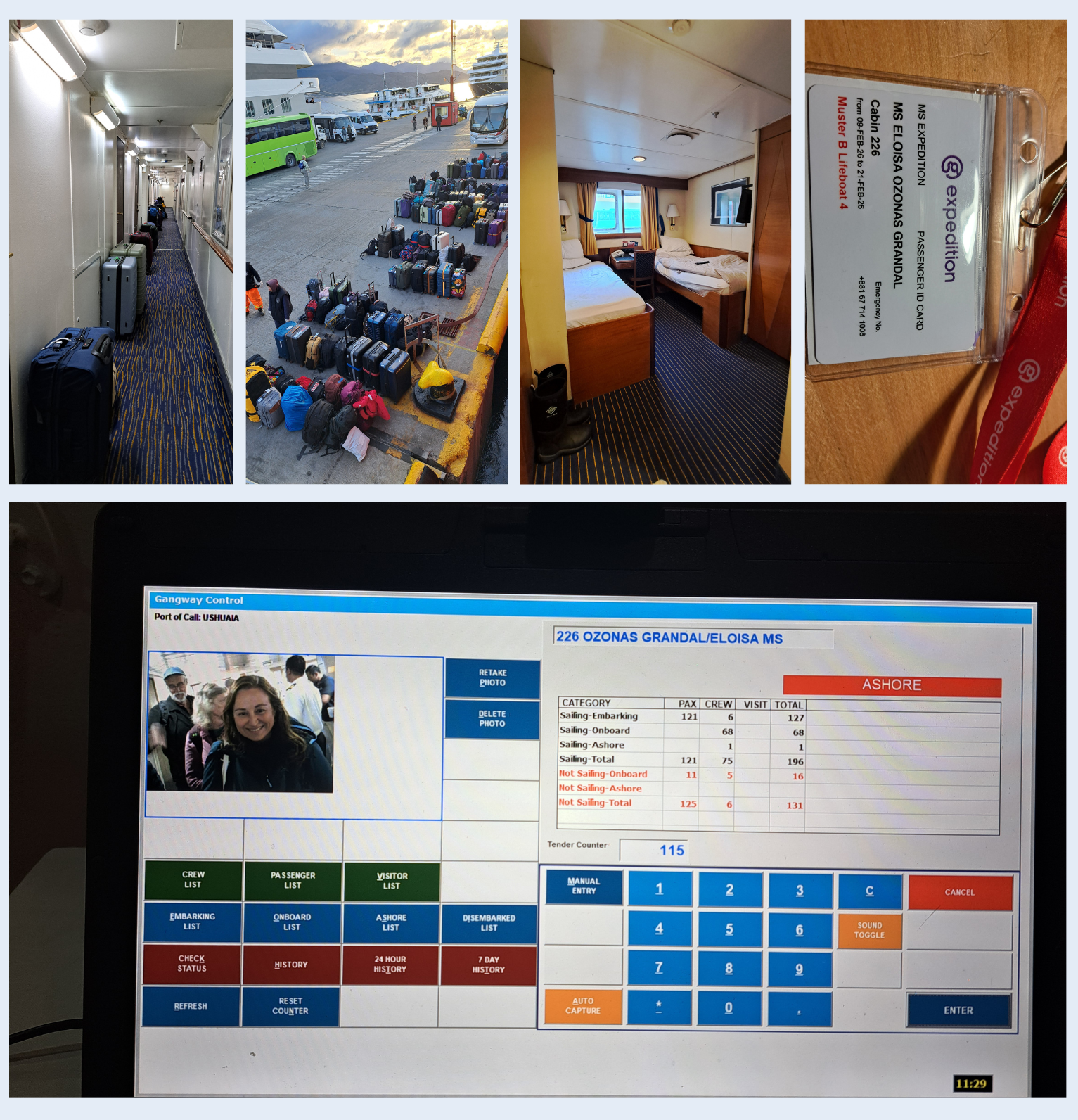
The logistics on an expedition like this are essential and shape the rhythm of daily life on board. The first thing you do when you step onto the ship is check in at reception — very much like in a regular hotel. They take your photo and give you a personal card. This card is vital: it records every time you enter or leave the ship. It would be unthinkable — and dangerous — to leave someone behind on the Antarctic shore simply because their return wasn’t properly checked.
Once you have your card and settle into your cabin, the mandatory safety procedures begin. Everyone must attend. You also take part in a full safety drill with life jackets, so you can learn the procedures, the muster stations, and the lifeboat assigned to you.
Fortunately, you have the two days of the Drake Passage to get familiar with the ship, but on that very first day you already want to explore every corner and figure out the layout of that maze of corridors and staircases. My cabin was on the port side, toward the middle of the ship and very close to the mudroom. I had chosen a cabin just for myself — spacious, convenient, and very comfortable.
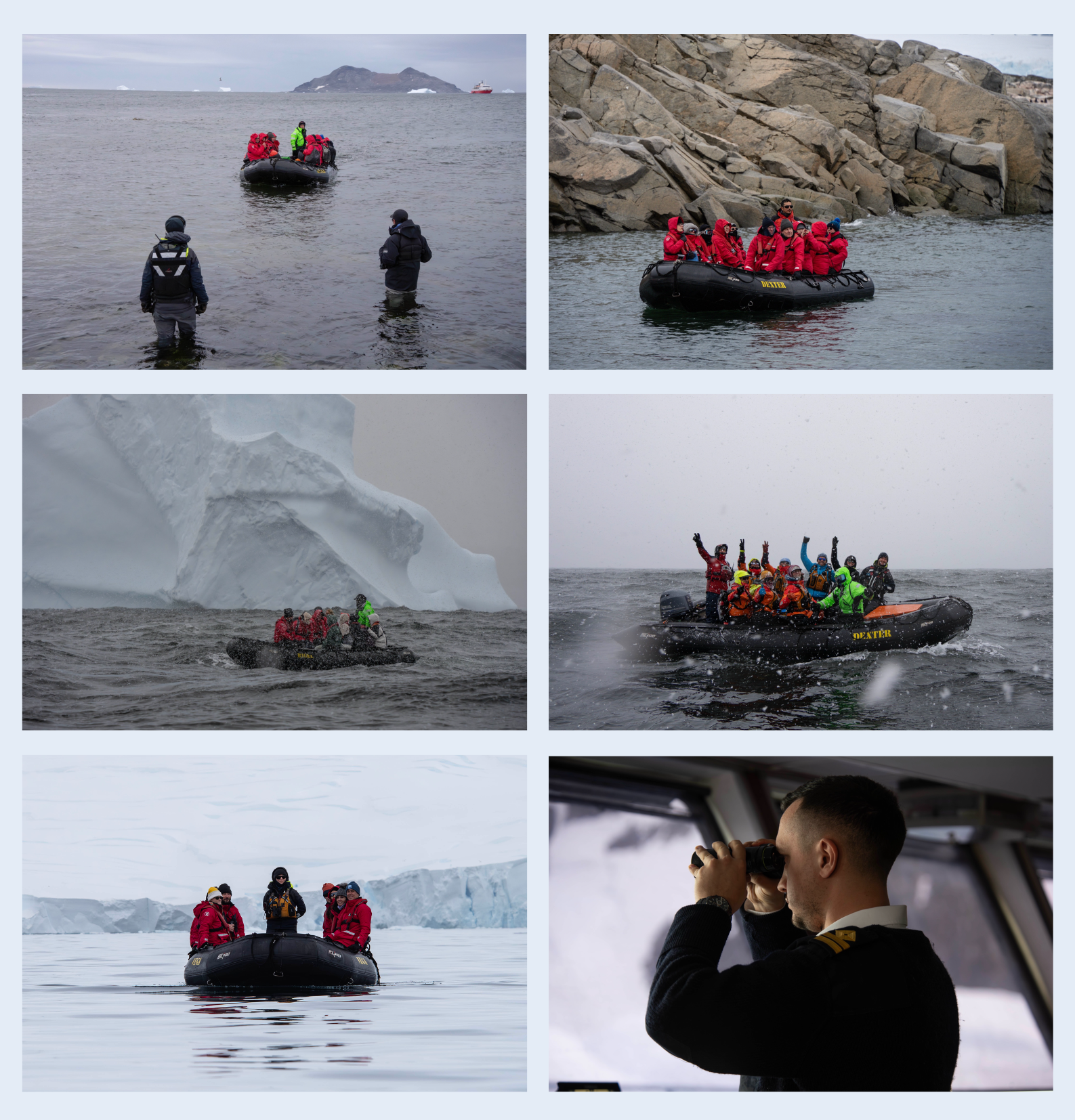
The next step was forming the zodiac groups. This is standard procedure, because of course we can’t all disembark at the same time, and having everyone waiting together in the mudroom would create a huge bottleneck. Instead, groups are called over the PA in a very orderly way. The groups on our expedition were Albatross, Gentoo (mine), Leopard, and Humpback.
During the first days we also attended the mandatory IAATO & Zodiac Briefing, the mandatory Bio‑Security Check, and the session on behavior guidelines in Antarctica. These rules are extremely strict — remember that Antarctica’s ecosystem is fragile, and any external contamination could harm or sicken the wildlife.
As part of the bio‑security process, we inspected all the clothing and gear we would take ashore: gloves, hats, trousers… checking for any trace of previous trips — seeds, dirt, dust — and vacuuming everything thoroughly. It was quite striking to see how seriously this is taken.
To reinforce this protection even further, every time we disembarked we had to step into a tray filled with eco‑friendly disinfectant, both when leaving the ship and when returning.
The rules regarding wildlife were very clear: you must never approach any animal deliberately, and you should not get closer than five meters. If you accidentally find yourself in the path of a penguin — or if they walk toward you — you must slowly step aside, calmly and without causing them any stress.
You’re also not allowed to place anything on the ground, such as backpacks, nor can you kneel to take a better photo. And of course, you must never drop anything, not even accidentally — you have to be careful that the wind doesn’t blow away a tissue or a wrapper. The idea is that once we leave, everything should look exactly as it did when we arrived.


· · · · · ·
What you need TO KNOW FOR this trip
You need to be truly sure you want to take this trip. It’s not an easy destination, not the kind of place you go to “see how it feels,” and definitely not a trip you can interrupt halfway through. It’s also an expensive journey that requires some planning beforehand.
The first thing you should do is compare as many expeditions as you can and prioritize what matters most to you. As I mentioned earlier, if what you’re looking for is comfort and luxurious onboard experiences, then this is not the right trip for you. But if what you want is the versatility of a small ship — one that can reach more remote places and move nimbly among icebergs — and if you value a warm, familiar atmosphere among the crew and fellow passengers, then this is your trip. Even so, you’ll still find several options that meet these criteria. That’s when you need to factor in your preferred dates, the itinerary, and of course, the price.
I chose this G‑Adventures expedition because it was one of the few that travelled so far south, crossing the Antarctic Circle, and because this Canadian company has an excellent reputation in adventure travel. Once you’re sure this is the expedition for you — and after paying the deposit — the planning begins. Keep in mind that the package includes one night in a hotel in Ushuaia on the night before embarkation, so you should plan to arrive in Argentina at least a couple of days earlier — just in case anything happens: delays, cancellations, or unexpected changes. In my case, since I had to pass through Argentina anyway — a country I had never visited before — I knew I wanted to spend at least one week there, either before or after the expedition. In the end, I decided to arrive a week earlier; that way, if anything went wrong, I would already be close to Ushuaia. So, I spent three days in Buenos Aires, three in El Calafate, and another three in Ushuaia, taking domestic flights between each stop. You can read about my experience in Argentina here.
The next step — besides looking for the flights that suit you best — is getting proper medical insurance. This is not optional. It is absolutely mandatory. And it needs to be a strong policy, with enough coverage for repatriation and high medical expenses. This is no small matter. Once you leave the Beagle Channel and head out into open waters, you are at the mercy of nature and of your own physical condition. There is a doctor on board, but their role is mainly for basic consultations: seasickness, minor cuts, small injuries — not for serious or emergency interventions. If something major were to happen (and they reminded us of this more than once), the ship would have to turn around, leaving the entire group without their dream trip. That’s why you must be completely honest when filling out the medical questionnaire beforehand, and very aware of your own abilities and mobility. The trip requires a certain level of flexibility: getting in and out of the zodiacs, doing short hikes on land, and moving around the ship without difficulty.
And finally, all that’s left is packing your suitcase. Are you into photography? Then don’t forget your tripod, cameras, lenses, batteries… Do you want to be the first to spot wildlife? Make sure you pack a pair of binoculars. You won’t need to bring boots or a parka. They provide both on board: the boots are loaned to you, and the parka is yours to keep — a beautiful souvenir from the trip. You also don’t need to pack excessive winter clothing. You’ll need warm layers, beanie, gloves… for landings and for spending time out on deck, but most of your time will be spent inside the ship, where comfortable, casual clothing is more than enough. And don’t forget your swimsuit if you’re planning to do the Polar Plunge! And of course, sunscreen. You’ll be in the austral summer, surrounded by ice in every direction — a giant mirror that can burn your skin if you’re not properly protected.
You don’t need any previous experience, nor do you need to be particularly fit. Fortunately, I had already travelled to Greenland and Svalbard, so I knew what an expedition ship of this kind is like, how the daily operations work, and what it means to get on and off the zodiacs. In Svalbard, things were even more complex because of the possible presence of polar bears: the guides always landed first to scout and secure the area, and we had to do all the walks in small, guided groups. In Antarctica, however, you have much more freedom — you can walk at your own pace along the marked route, which feels like such a luxury.
Overall, the hikes are easy. Nothing technical, except for occasional patches of ice and some routes a bit steeper than others, but nothing demanding. And if one day you don’t feel like walking or don’t think you have the energy for it, they always offer a zodiac exploration instead, where you can sit comfortably and enjoy the scenery from the water.
It’s important to know what is included/not included in the package:
| Included | Not included |
|---|---|
|
|
· · · · · ·
DAILY Travel Journal
Here you can find a very complete journal, written day by day by the expedition guides. I’m afraid I can’t compete with their enthusiastic storytelling or their level of detail, so in this section I’ll focus on sharing my own daily impressons and feelings. These are the highlights of each day:
Monday 9th Feb, Tuesday 10th Feb, Wednesday 11th Feb 2026
The first three days unfolded entirely on the ship: embarkation, meeting fellow travellers, the introduction to the crew, safety briefings, receiving our parkas and boots, the first lectures… and, of course, the first waves of seasickness. Somewhere in between all that, we spotted our first wandering albatross gliding effortlessly over the Drake Shake.

· · · · · ·
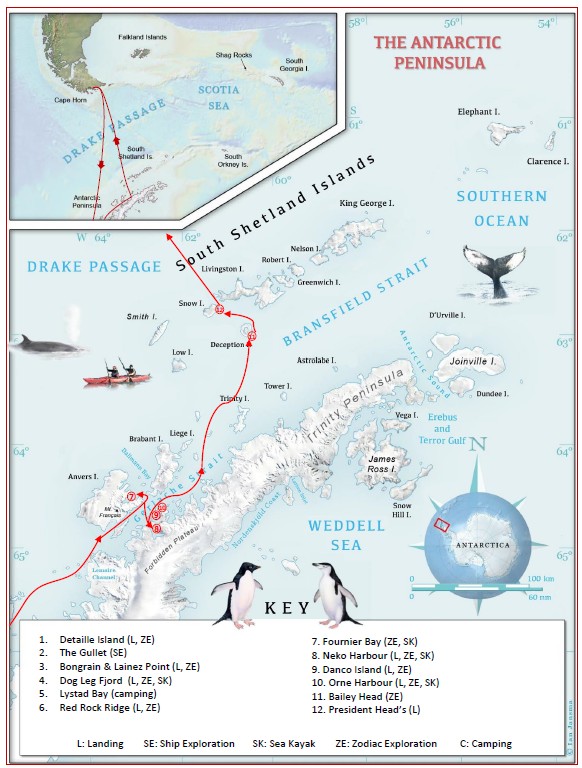
It was a day full of emotions. We spotted the first icebergs and the silhouette of the Antarctic mountains, as we prepared to cross the Antarctic Circle. Just before noon, we celebrated the moment we reached 66.5 degrees south latitude — a milestone marked with a toast, photos, and music. But the day had only just begun. We made our first landing on Detaille Island, at an abandoned British base, and then our first zodiac exploration, where we saw Adélie penguins and Weddell seals. Later, we headed toward the Gullet Strait to pass through its narrowest section, the Gunnel — without a doubt one of the most magical moments of the entire trip. The sea was like a mirror, the colours of the evening shifting between pinks, purples, and blues, the ship moving slowly forward, all of us gathered at the bow when suddenly… a group of orcas appeared, delighting us with their visit.
Detaille Island


The Gullet


· · · · · ·
Friday 13th Feb 2026
This day was one of the most action‑packed of the entire trip — not only did we do two landings in the morning, but in the afternoon we managed a third one! And in a place that had never been visited before. At Bongrain Point we visited our first Adélie penguin colony, where we watched the classic chases of chicks running after their parents across the rocks. Later, at Lainez Point, we hiked across a glacier with truly spectacular views. In the afternoon, after a zodiac exploration, we landed at Dogs Leg Fjord — our very first landing on the Antarctic Peninsula itself (until then, all our stops had been on islands). We also saw our first leopard seal. By the end of the day, a handful of brave souls even chose to camp out and spend the night under almost hurricane‑force winds.
Bongrain Point


Lainez Point


Dogs Leg Fjord


Camping


· · · · · ·
Saturday 14th Feb 2026
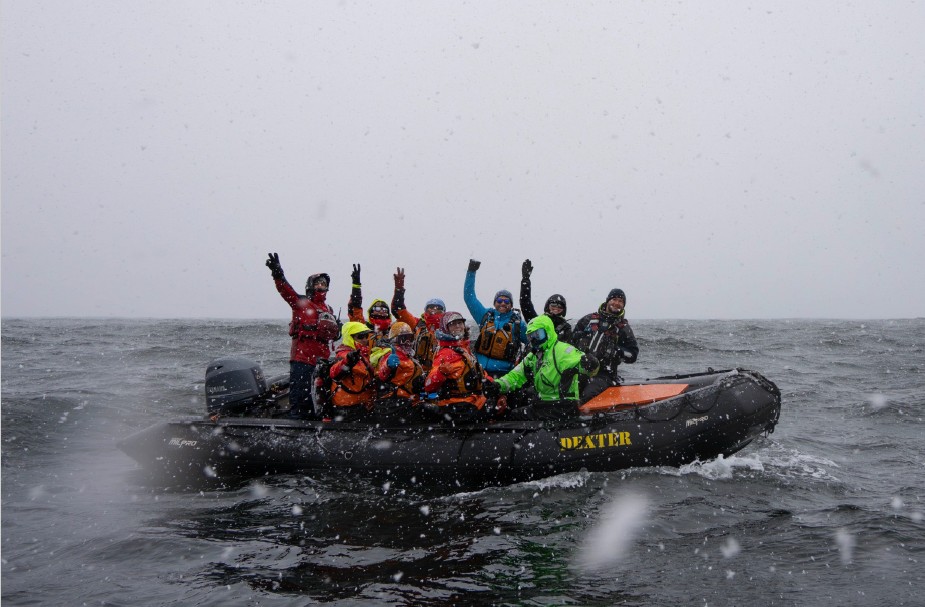
We dedicated the morning to the Polar Plunge — in the southernmost waters the G‑Expedition had ever reached, and therefore the coldest of the entire trip. It was a morning of splashes, screams, and a lot of courage. (And if you’re wondering: no, I didn’t do it. I was still dealing with a cough and a sore throat, and I didn’t want to push my luck). In the afternoon we arrived at Red Rock Ridge in Marguerite Bay, where we went for a hike to see penguins and seals. As evening approached, the weather changed abruptly, and it was almost a struggle for the last zodiacs to make it back to the ship.
Polar Plunge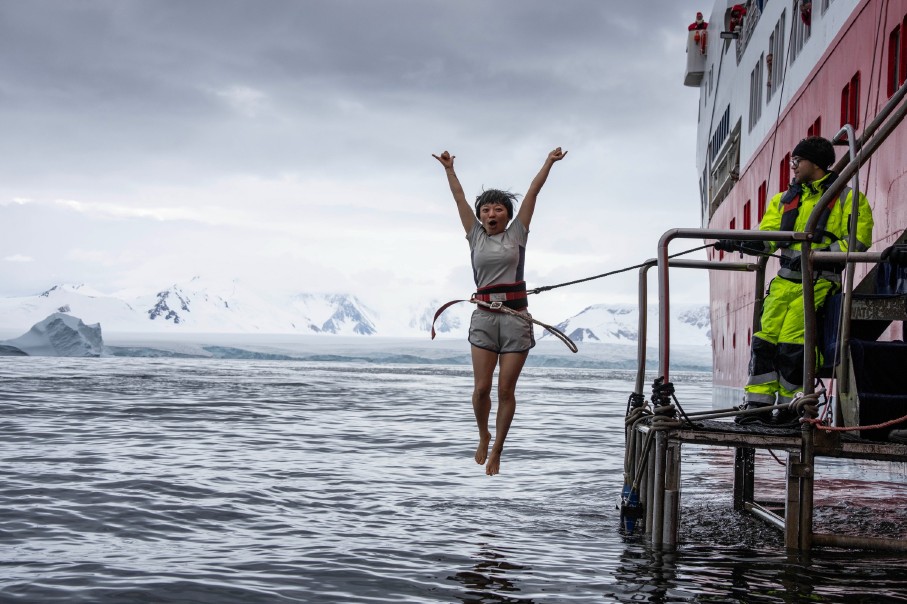
Red Rock Ridge


· · · · · ·
Sunday 15th Feb 2026
After three days exploring the southern part of the Antarctic Peninsula, we spent this day entirely on board, already sailing north and picking up speed to outrun the bad weather moving into the area. We crossed open waters without stopping, passing through the most exposed stretch of sea before reaching the shelter of fjords and bays farther north. For me, this day was even worse than the Drake. My cabin on the port side took the full impact of the waves crashing in from the west, and I felt every single hit. I ended up watching all the lectures from my room through the ship’s internal TV channel.

· · · · · ·
Monday 16th Feb 2026
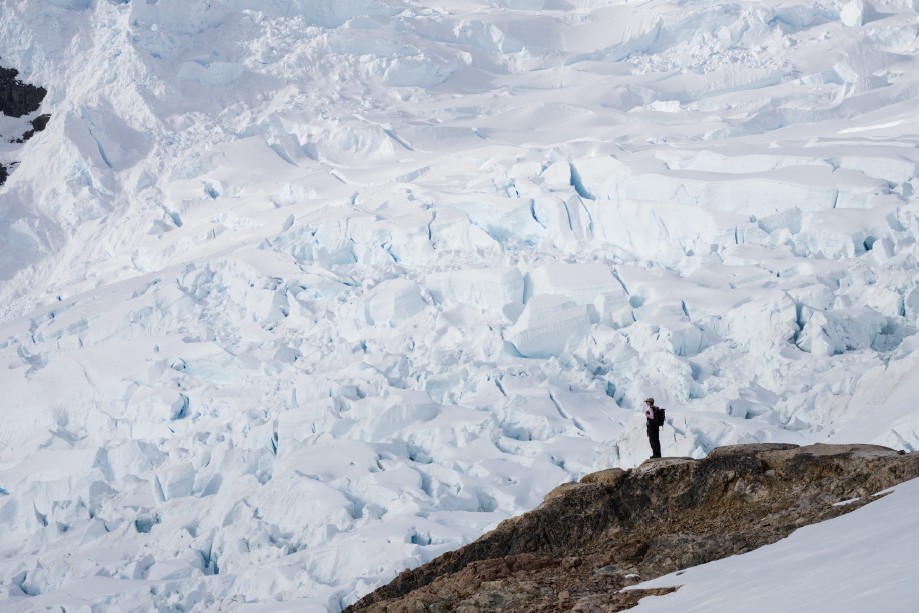
We woke up in a calm Fournier Bay, and in a rare logistical operation the crew lowered all the zodiacs for exploration. In this bay we were able to drive right next to feeding humpback whales, watching them create bubble‑nets and rise with their enormous mouths wide open. The kayakers were especially lucky — they saw whales breaching and slapping their pectoral fins right in front of them. In the afternoon we landed at Neko Harbour, where we saw Gentoo penguins for the first time and their famous little “highways” carved into the snow. The day ended with a barbecue out on the terrace.
Fournier Bay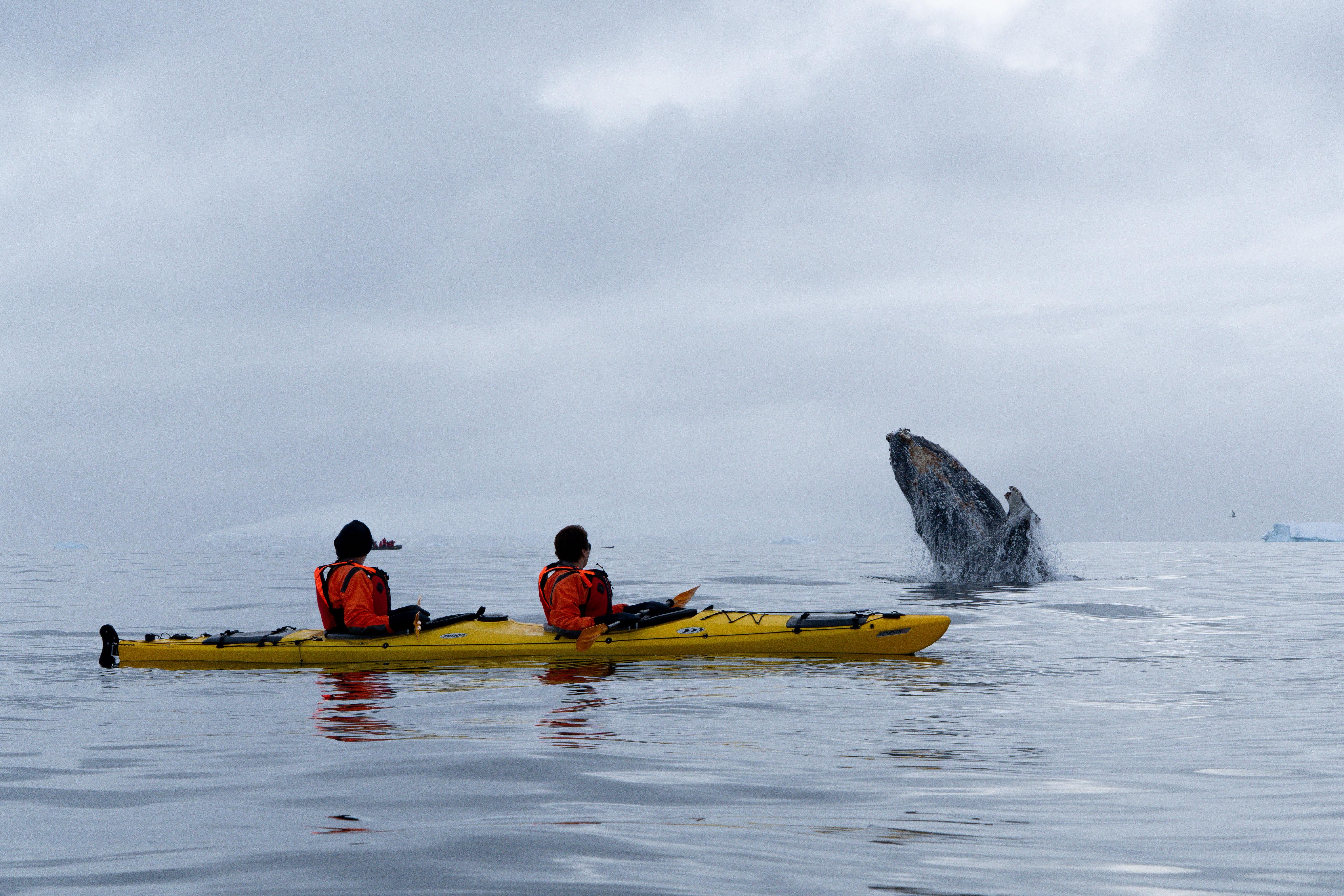


Neko Harbour




· · · · · ·
Tuesday 17th Feb 2026
We made our first landing of the day on Danco Island, where we were able to observe more of the Gentoo penguins’ behaviour, along with many Weddell seals resting along the shore. During the zodiac ride back to the ship, we spotted a leopard seal resting on an iceberg — such an incredibly powerful animal. In the afternoon we headed to Orne Harbour, where we saw our first Chinstrap penguins, famous for climbing all the way up to the peaks.
Danco Island


Orne Harbour


· · · · · ·
Wednesday 18th Feb 2026
Sadly, the end was approaching — this was our last day of landings. But what a day it was. We first attempted to land at Baily Head, on Deception Island, but the rough sea made it impossible; the surf on the beach was simply too dangerous. Instead, we went out on a zodiac exploration, where we saw plenty of chinstrap penguins, with the occasional Gentoo sneaking among them, and many fur seals sharing the beach. We also witnessed a terrifying moment — the kind you’d rather only see in documentaries, not in real life. A group of enormous giant petrels cornered a young penguin in the water. The poor thing tried to defend itself as best it could, crying out and flapping desperately, but there was nothing it could do against such predators. It’s an image I’d rather not remember. In the afternoon we headed to Presidents Head on Snow Island, where we made our final landing and saw elephant seals resting on the beach. We also saw some flora for the first time.
Baily Head


Presidents Head



· · · · · ·
Thursday 19th Feb, Friday 20th Feb 2026
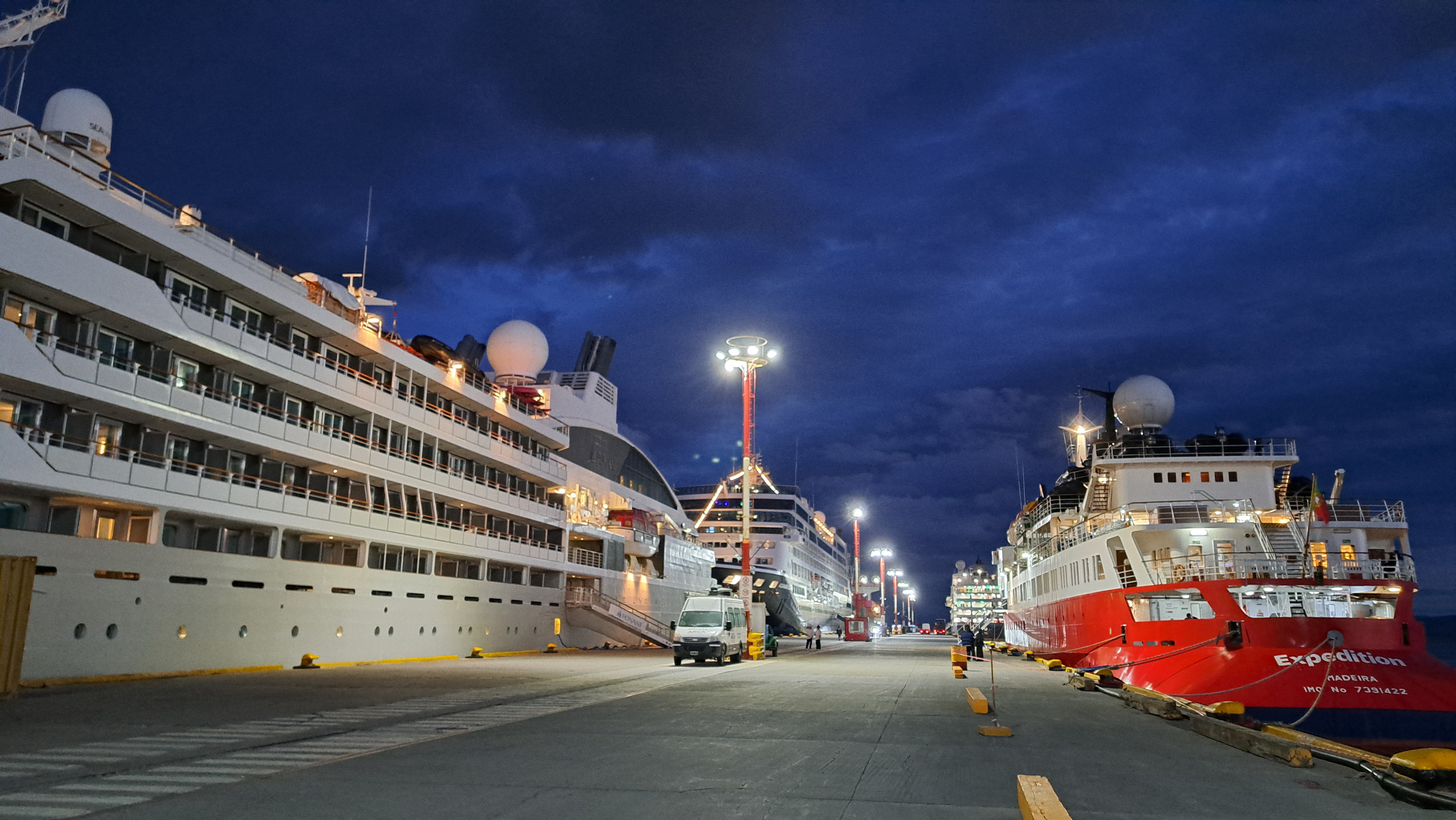
Once again we faced the Drake — two full days to make our way back to Ushuaia, a time for new lectures, recaps, and farewell celebrations. As we sailed through the Beagle Channel, we spotted different seabirds, many penguins in «La Pingüinera», and even a dead whale washed up on the shore. At night, we finally reached the port of Ushuaia, and after thirteen days at sea it felt strangely surreal to walk down the gangway and find ourselves back on streets full of people and cars. The land‑sickness after so many days on the ocean was almost worse than the seasickness itself. We spent our last night in our little cabin‑refuge before doing the final check‑out the next morning.
Beagle Channel


You can download the full dossier of this trip, with extra information like the ice charts, weather charts, or the dinner menus. And here you can see all the photos of this trip.
Thank you to everyone who has read this far!
RELATED CONTENT
 El Blog de Eloísa
2 comentarios en “Antarctica, the 7th continent”